The Exile of Republicans after the Spanish Civil War

An exhibition currently on in Madrid and well worth seeing tells the sad story of the half million Spaniards on the losing side of the Civil War who fled Spain in early 1939 to avoid living under a fascist regime that threatened harsh reprisals for those with Republican sympathies. Some of those who escaped spent the rest of their lives in exile, dying before a safe return was possible; others remained until the death of Franco nearly forty years later. The great majority fled to France but South and Central American countries like Mexico, Chile and Argentina also took in refugees, while the US and some other European countries admitted smaller numbers.
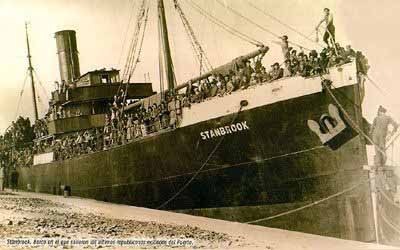
stanbrook

A lucky few managed to get on boats, most from the port of Alicante. Notable among them was the Stanbrook, captained by a Welshman, Archibald Dickson, who ditched his cargo and and massively overloaded his ship by taking on board some 3,000 desperate refugees. Risking missile attacks from enemy destroyers blockading the port, the heeling Stanbrook cast off, eventually arriving in Oran, Algeria, where the passengers were quarantined for a month in dire conditions before being allowed to disembark. Far more – many thousands – were left stranded at the port of Alicante after the last ship had departed. With all hope lost and knowing their likely fate, some committed suicide. Those who remained when Italian troops arrived soon after were herded to makeshift camps, where many died from starvation, disease, beatings or forced labour in the salt marshes.

fullsizeoutput_f44

fullsizeoutput_f40


But the vast majority left on foot, on donkeys or mules or on lorries, braving the snow-covered Pyrenees between Andorra and the Mediterranean, often using goat tracks and smugglers’ routes to reach one of the passes still open and cross into France, while others attempted to reach the border by coastal routes. The French police and military disarmed and registered the Republican soldiers, directing them to concentration camps on the beaches of Argelès-sur-Mer and Saint Cyprién. As the photos show, the lack of shelter meant they had to dig holes in the beach for protection from the elements. They were hardly sufficient against the cold and rain of winter and many died of disease, starvation or exposure. The injured or sick and the majority of women and children were gradually evacuated to refuges scattered across the country but thousands remained trapped in the camps of the eastern Pyrenees or were sent to others established further west.
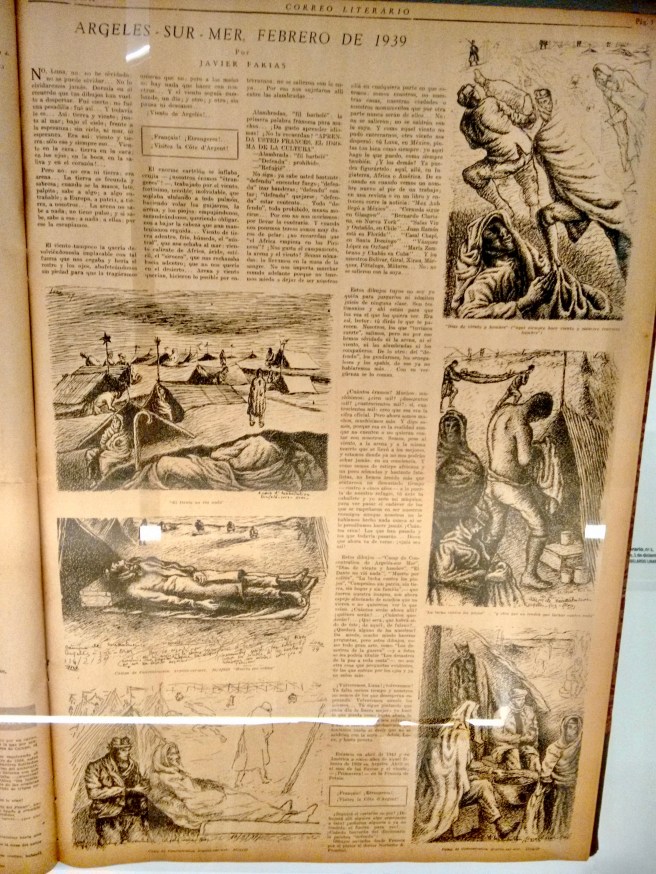
fullsizeoutput_f2f

The luckiest were those who made it to France and boarded one of the boats sent by Mexico to rescue Spaniards from the camps there. The first, the Sinaia, sailed from Sète in 1939; later others followed. Mexico was one of the few countries to not only accept but welcome Spanish Republican refugees. When the Sinaia landed in Veracruz, the passengers were greeted as heroes and helped to settle there.

fullsizeoutput_f24
The Sinaia

The curator of the exhibition 1939 Exilio Republicano Español, Juan Manuel Bonet, sees it as ‘an exercise in memory’ and a chance to reflect on all that was lost when half a million people escaped over the border. It portrays in written testimonies, photographs, artworks, posters and sound archives the trauma and the physical hardships suffered by these refugees. Along with photographs by Robert Capa of the retreat, known as La Retirada, and those taken by Francesc Boix in Mauthausen, where seven thousand of the Spaniards who escaped to France were later sent at Franco’s bidding, are physical objects: spectacles, a spoon, a penknife; a suitcase belonging to one of the few survivors and kept by his daughter. Equally moving are twenty-two compositions by Pierre Gonnard that consist of photographic portraits accompanied by testimonies of those who were children in 1939, remembering the flight of their families and talking about their lives in exile in France.


fullsizeoutput_f50         IMG_20200118_171300474_HDR

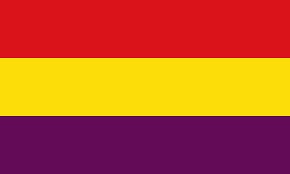
Among the exiles were well-known artists and writers, scientists and intellectuals, including Picasso and the poet Antonio Machado, who died in the French Pyrenees only three weeks after crossing the border. Manuel Azaña, last President of the 2nd Republic also died in France: the Republican flag that covered his coffin is on display alongside his desk. The collection of paintings, sketches and sculptures includes a couple of works by Picasso, others by Granell, Gaya, Fenosa and many more. Dozens of books are also displayed: the poems of Alberti and Ayala, the writings of philosopher María Zambrano, among many more. Picasso’s Guernica had been taken to safety in New York; there are images of its return to Spain in 1981 during the ‘Transition’ after Franco’s death. One section of the exhibition highlights the work of Frenchman Philippe Gaussot, a left-wing Christian who helped rescue Republican women and children and, with the cooperation of a Catholic Aid Committee, set up safe colonies for the children in France.

Also featured is the story of the 3,000 children from Republican families who were evacuated to Russia early on in the Civil War, sent by their parents, who feared for their safety in Spain. Little did they know that until 1956, none of them would be permitted to leave the USSR and return to Spain or see their families. They lived and studied in special refuges and after World War II, started work in various jobs and professions. Some stayed permanently in Russia, others returned with half-Spanish half-Russian identities, trapped between two countries, two ideologies and two languages. The exhibition in Madrid includes written testimonies from some of them.

Britain too had played a part by evacuating Basque children and bringing them to Britain after the bombing of Guernica. In 1937, the Habana, an old cruise liner, sailed from Bilbao to Southampton with nearly 4,000 child refugees on board. The Prime Minister, Stanley Baldwin, had been reluctant but public opinion forced him to change his mind. Even then, permission was only granted after the refugee committees organising the rescue had accepted responsibility for the upkeep of the children. They were accommodated in camps set up in several different towns in England and received support from many local people. However, on the whole, Britain stuck solidly by the non-intervention treaty it had signed. If (like Germany and Italy), it had chosen not to, the outcome of the Civil War might have been very different.

IMG_20200118_171631485
Helios Gómez, Evacuación, 1937


Spain’s Mengele

The Spanish documentary, The Silence of Others, about the crimes perpetrated by Franco during his 40-year dictatorship and the long drawn-out struggle for justice by victims and their descendants, was shown on BBC TV last week. Several of my friends in the UK told me how moved they had been, watching it. Having already seen the film, I was not surprised at their reactions. It is harrowing. The grief and in some cases bitterness of those interviewed – survivors and relatives of those imprisoned, tortured, executed, disappeared – is still raw decades later. There has been no reconciliation process in Spain, no apology or admission of wrongdoing, let alone prosecution, no attempt at any kind of reparation. The ‘pact of silence’ agreed in 1977 during the transition to democracy that took place after Franco’s death swept all the crimes of those years under the carpet. The silence continues. Forbidden to pursue their case in Spain, the victims are now relying on the Argentinian courts under the law of universal jurisdiction for crimes against humanity. Some progress has been made. Arrest warrants have at last been issued against some of the alleged perpetrators, including torturers, former cabinet ministers and doctors involved in cases of stolen children.

The film includes interviews gathered over six years with those who were imprisoned and/or tortured, those who have family members lying abandoned in mass graves and with women whose babies were stolen from them during the long years of the dictatorship. Their stories are heartbreaking. How must it feel to see your torturer walking free in your own neighbourhood? To be unable to honour your deceased loved ones by giving them a decent burial? To know your stolen child exists but be unable to trace them? The documentary mentions the ‘red gene’ – the theory put forward by Franco’s chief of psychiatric services, Antonio Vallejo Nájera that gave the title to my recent novel.

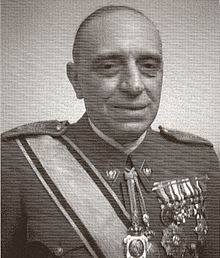
Vallejo-nájera

Vallejo Nájera (sometimes referred to as Spain’s Mengele) was born in Palencia in 1889. He was sent to the Spanish Embassy in Berlin in 1917 and became a great admirer of the Nazis and their eugenics theories. After returning to Spain in 1930, he set up psychiatric clinics and later conducted experiments on Republican prisoners, including some from the International Brigades. He argued that Marxists, anarchists and anyone who supported freedom or equality was suffering from a pathological condition. The men, he said, were of low intelligence, while ‘red’ women participated in politics only to satisfy their sexual appetites. They were degenerate, given to delinquency and a marked sadistic nature that allowed their animal instincts to be unleashed. Reasons for their high level of participation in Marxist politics were found in their characteristic mental instability, poor resistance to outside influences and lack of control over their personalities. “When the brakes that normally contain women in society disappear, it awakens in the female sex the instinct for cruelty, surpassing all imagined possibilities, by removing intelligent and logical inhibitions and giving way to feminine cruelty that is not satisfied with merely committing the crime but grows stronger in the execution of it.”

fullsizeoutput_f15

Re-education of Republican prisoners, both male and female was therefore essential. According to him, order, discipline, personal sacrifice and punctiliousness in service defined the Spanish race or spirit and in order to improve it, schools, universities, workplaces, cafes, theatres and all social spheres should be militarised and strict rules be imposed on women.

It was Vallejo Nájera who gave a pseudo-scientific justification for removing the babies of Republican women from them at, or soon after, birth. He argued that it was the only way of eradicating or curing the ‘red gene’. It would avoid contaminating the children with the evil of their mothers and ensure that the Spanish race remained pure, thus liberating society of a terrible plague. His views on women obviously chimed well with those of Franco and the Falange: women’s sole function in life was to bring up their offspring. This would perpetuate their mental inferiority; what intelligence they had would naturally atrophy.

cartelas

In writing The Red Gene, I wanted to bring home the dangers of fascism at a time when extreme right parties are gaining popularity in a growing number of countries. I chose to do so not by writing about politics but through the story of one family caught up in such inhumane practices as those perpetrated in Franco’s Spain. Up to 300,000 babies were stolen between 1939 and the 1990s (ideological motives later gave way to greed). In most cases, the mothers were told their babies had died. The Red Gene is fiction but true to its time and its context. It’s a story I feel could well have happened.

The Red Gene Amazon

Why Granada?

IMG_5071

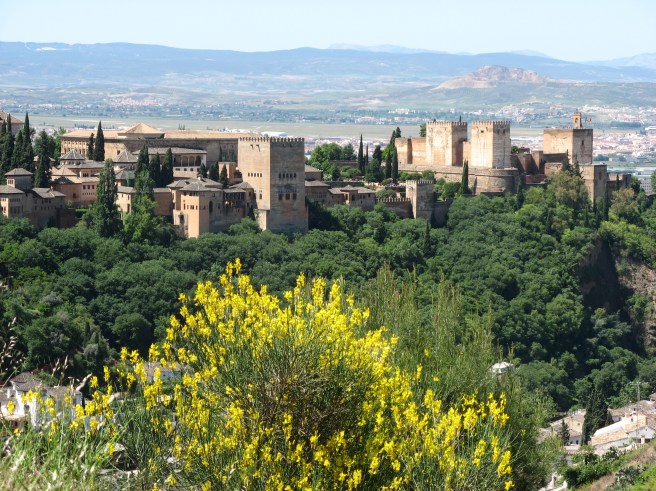
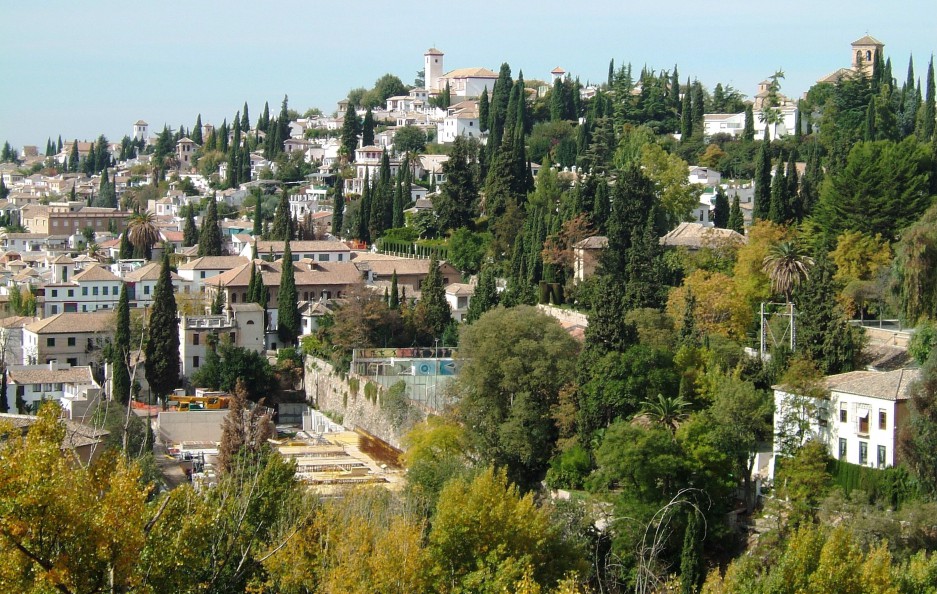
As the latest Brexit bill is debated in the UK Parliament following a referendum in which I had no vote and after more than three wasted years of expense and argument, I’m thinking about all my reasons for moving to Spain twenty years ago and all the things I love about living here in Granada. Many factors led me to choose this particular city: its size (not too big nor too small), its fascinating culture and history, its university, its mixed population, and of course the beauty of the mountains that form its backdrop.

I’d always felt at home in Mediterranean countries. Not just at home but happier. I think what made the greatest impression on me from my first experience of Southern Europe was the quality of the light. Colours were brighter, more intense. And my senses responded accordingly. Like a flower turned towards the sun, I opened up, all my senses becoming more alive. I still notice it when I return from visits to Britain: a rise in spirits, a loosening up, a long exhalation of release.

2004_1205Image0045

  IMG_1500


Warmth is obviously a vital factor: being able to live outdoors for much of the year, to eat outside whatever the season, linger in the streets or sit at a table on some restaurant terrace in sun or shade, or in summer by the light of the moon. It may be cold in winter (Granada is often a few degrees below zero in the mornings) but the sun still has strength and in the afternoons it’s usually possible to sit outside comfortably for a few hours.

IMG_20170329_221139

I love the liveliness of the streets, where there is always something going on day and night, where people don’t all rush off to their separate homes, shutting themselves off from each other. I love the more grown-up attitude to eating and especially drinking.  That alcohol-fuelled aggression that can hit the streets when the pubs close – one of the least endearing features of life in Britain – is rarely seen here. Both eating and drinking are regarded as social activities and keenly enjoyed as such; ‘binge’ is not a word easily translatable into Spanish. The right of workers to half-hour breakfast breaks in the nearest bar for coffee and toast, a chat or a chance to catch up with the news in la prensa seems to me eminently civilised, as does the custom of a long lunch and siesta when the family can relax together. The Spanish manage that ‘work-life balance’ so much better.

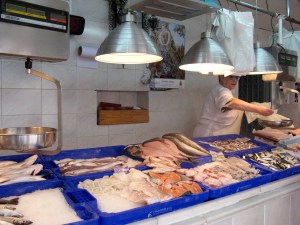
Then there’s the quality, variety and freshness of the food: fruit, vegetables, fish that taste as they should. Luscious, ripe cherries or figs or apricots; tomatoes with real flavour; prawns, squid, sea bass, sole, sardines, fresh from the sea. Ready meals are scarcely seen, even in supermarkets. Every town and village has a market for fresh food, available in its proper season.

fullsizeoutput_bc6          fullsizeoutput_3ea

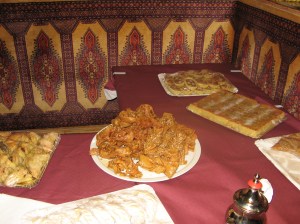
In bars, good coffee doesn’t cost an arm and a leg, while freshly squeezed orange juice is nearly always an option. If you prefer tea, you can simply head for one of the many Moroccan teterías where you’ll be faced with a choice of up to eighty different types along with delicious Arab pastries. In Granada, tapas come free with your drink and when a glass of Rioja or beer and a tapa come at just a couple of euros, an evening out doesn’t have to cost a fortune.

2004_1031Image0063

     IMG_1961


fullsizeoutput_434


Lecrin Valley tapa

I love the cariño, the warmth and affection expressed with touch, with kissing and embracing between friends. How cold a handshake seems in comparison. I love too the way the generations mix with far less segregation between age-groups. Go to a village disco, a wedding or any family occasion and you’ll see everyone from kids to grandparents bopping away to the same music, infected with the same good humour and sense of fun.

Of course not everything is rosy. Every place has its downside. But whatever setbacks I have to face seem immeasurably smaller when the sun is shining and the view from my window is so beautiful. If I ever have to return, I think a part of me will die.

IMG_20151105_111644390_HDR

sunrise 1


A thank you to my friends

This post is by way of a huge thank you to all the friends who have supported me in different ways on my writing and publishing journey. I am blessed in having a great number of friends spread all over the world – some going back to childhood, others relatively new, most somewhere in between. Writing is a solitary occupation and it’s easy to get discouraged. Being able to call on so many loyal friends has made all the difference – whether for moral support on the rollercoaster ride to publication, for giving me valuable feedback on early drafts, for practical help with accommodation, lifts or launch arrangements or for spreading the word about my books among their own friends and social media contacts.

In business circles, it would probably be called networking, but as a writer, I feel uncomfortable viewing contact with friends as a business strategy. In fact, although I’m selling something (my books), I have great difficulty thinking of it as a business at all. Perhaps this is because, up to now at least, it hasn’t provided me with any significant income. Perhaps it’s because money has never been my motivation for writing. Then again, perhaps I’m just being precious.

P1110585        IMG_8436

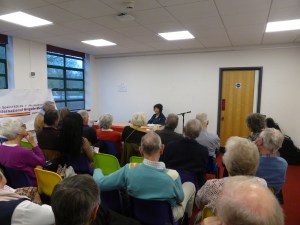
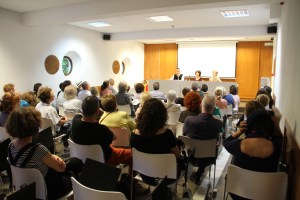
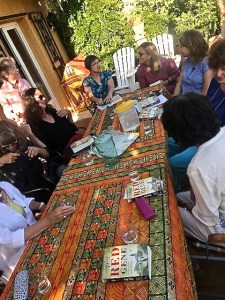
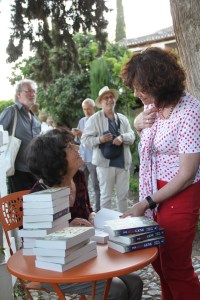
Launching the book at (so far) half a dozen different venues in both the UK and Spain and always seeing friendly faces in the audience has meant a lot to me. I am truly grateful to all who made the effort to come and who then bought and read the book, posted reviews and/or bought more copies to give as presents – all of which has helped massively in getting the books out there.

IMG_20190608_121414        fullsizeoutput_d80


IMG_8557          P1110605


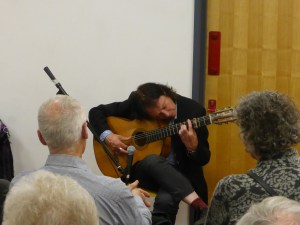
Thinking just of The Red Gene (though it was a similar story with Secrets of the Pomegranate), I have a multitude of friends to thank. My artist friend Allan drew the maps. Lala recommended reading material and put me up in London while I researched at the Marx Memorial Library. Javi, my pilates teacher, invited me to visit his parents in Antequera, the setting for a large part of the book. Lucy put me in touch with Pepita, a retired Spanish midwife. Paloma, a nurse friend in Granada, provided me with details of hospital routines. Rosa, a doctor, checked some of the medical details in my novel. Resu introduced me to her lovely mother, who spoke of her life during the dictatorship but sadly didn’t live long enough to see publication. Sue, Lily, Andrew, Lucius, Ann and Jane gave me valuable feedback on my first draft. Isabel read the Spanish sections to check their authenticity. Expert photographer Candi did a photo-shoot that has provided me with an ample choice of shots for publicity. She also arranged for me to use the beautiful Carmen de la Victoria for my Granada launch and introduced me to Gerardo, a fellow Granada University professor, who gave a brilliant introduction to my talk. My brother Tony helped arrange my Oxford launch and spread the word mong his friends and acquaintances as well as putting me in touch with Marcos, the flamenco guitarist who played at the launch. Barbara, Anne and Jill made sure my book was included in their reading group programmes for next year. Flor took the record for number of copies bought for friends – about twelve, I think! Sue arranged my talk in Mojácar and invited me to stay with her for the weekend. Almost all my Spanish interviewees were friends of friends or relatives of friends. Numerous others – too many to mention by name – encouraged me along the way when, believe me, encouragement was badly needed. My sincere thanks to every one of you. Without your support and belief in me, my journey would have been lonelier, less successful and a lot less rewarding.

The divine power of the novelist

I’m not the world’s most decisive person. Even quite trivial decisions cause me endless stress. I dither and agonise, considering one option and another, sometimes half the night. Yet when it comes to my fictional characters, I suffer no such torments. Quite the reverse, I revel in my control over their fates. Limited only by my imagination, I am free to manipulate their lives at will, reward or punish them, bring tragedy or triumph onto their heads. Like an omnipotent god, I can give them what they most crave or deny them all consolation. And what’s more, it’s power without responsibility because after all, it is only a story.

In both Secrets of the Pomegranate and The Red Gene, I had to kill off important characters – not an easy option. After accompanying them for months or years, sharing their innermost emotions, their hopes and dreams and darkest fears, I had come to regard them as close friends. Being so attached made it feel almost disloyal to sacrifice them for the sake of the plot. It might surprise some readers to know that even the author who has engineered their demise feels a keen sense of loss.

Far more than non-fiction writers, who deal mostly in facts, novelists are faced with myriad decisions at every stage of the process. Before even starting to write, the basic questions of plot, characters, setting, point of view and more have to be decided. But it doesn’t stop there. Although it’s true that the characters take on lives of their own, it is still up to the author to set the seal on every small act, approve each line of dialogue uttered, resolve the quandaries they face.

In The Red Gene, after researching the backgrounds of the real British nurses who volunteered in the Spanish Civil War, I had to decide on my heroine’s social and geographical milieu and her motivation for going to Spain. Was she one of those girls from the East End of London or a northern industrial city who had joined a trade union or the Communist party after seeing at first hand the terrible conditions of poverty and disease in the slums of her hometown? Was she driven by her political beliefs, the mission to stop fascism in its tracks? Or was she from a more comfortable background, moved less by politics than by humanitarian concerns, feelings of empathy for the suffering population in Spain.

fullsizeoutput_65f    5930046


Once I had decided on Rose’s background and the impulses that prompted her to take this brave step, her personality began to emerge but not without a whole series of choices by her creator (me). All her actions, the decisions she herself made throughout her life, were dictated at least in part by this personality, influenced naturally by the experiences, good and bad, that I’d chosen to put her through.

As a girl born at the start of the Franco dictatorship, Consuelo had far fewer options open to her than did Rose. Whatever personality I bestowed on her, the mere fact of being female determined her function in life: to be a wife and mother. Growing up in a strongly nationalist family, it does not even cross her mind to question her role.


cartelas

Her daughter Marisol, on the other hand, inhabits a very different Spain, one that has changed almost beyond recognition. She has many more choices, many more opportunities, which means I, as the author, was faced with many more possibilities. I was free to give Marisol the personality and path in life that best suited my purposes.

In developing the plot, there are logistical questions to be resolved – like how to get my characters from one place to another. Rose’s decision, revealed in the first two pages of the book, about what to do when the war was over, determined the whole direction of the story but it was up to me to decide on the outcome of that decision and later to find a way of getting her safely out of Spain. Achieving that tricky feat relied on an interaction between chance events and aspects of her personality. My ingenuity was similarly tested in Consuelo’s case. Having decided where I wanted her to grow up (in what kind of family and geographical location), my challenge was to find the means of enabling it. This time, I had to rely solely on fate to achieve my objective.

My biggest decision, however, concerned the resolution of the story, how it would end. Would Rose and Consuelo, the two most important characters, meet and if so, how and where. On that particular point, my lips are firmly sealed. To reveal the answer would be a complete spoiler for those who haven’t yet read the book.

Photos for The Red Gene: where it all happens

1*0RqWi1HW1RH-Q2in35xctA IMG_1050

Suicide Hill, Jarama  PART 1                       Republican hospital at Tarancón PART 1

river and railway line    2004_1031Image0083

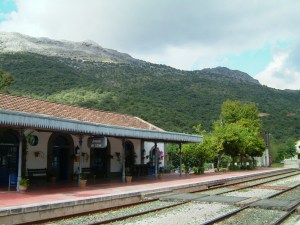
2004_1031Image0084 Railway line Antequera to Algeciras PART 3


IMG_1393        IMG_1379

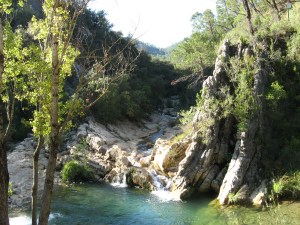
Rio Borosa 11      Rio Borosa 2

IMG_1382

Sierras de Segura & Cazorla, Jaén  PART 3

fullsizeoutput_baa          IMG_20181104_123227373_HDR    fullsizeoutput_bb6

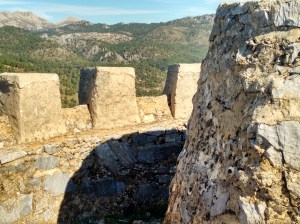
Civil War trenches, Sierra de Huetor, Granada

convento-de-belen    images  imagesfullsizeoutput_d61    que-ver-en-antequera-2

indio-vigila-Andalucia-AYUNTAMIENTO-ANTEQUERA_EDIIMA20160318_0674_18Antequera: churches and Peña de los Enamorados (“The sleeping giant”)  PARTS 2, 4,  & 6
images              images

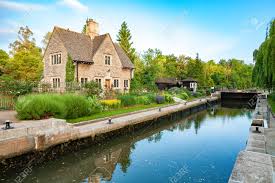
River at Oxford  PARTS 5, 7, 9 & 13

73fe4346_z    bbc5ecce_z

Parador, Jaén  PART 7

IMG_5225

Granada, market in the Realejo PART 8

img_4342

Campo del Prinicipe, Realejo, Granada (painting by Allan Dorian Clark)  PART 8

    fullsizeoutput_65c  fullsizeoutput_65a

Cañar, PARTS 7 & 9

IMG_3432  Capileira early morningpampaneira 4

2006_0415Image0013    2006_0415Image0007

Alpujarras PARTS 7, 9 & 12

IMG_3437  Bodega Pampameira 3


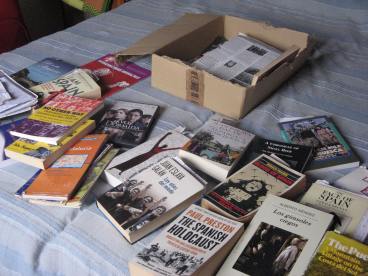
Bibliography: Some of my background reading for ‘The Red Gene’

IMG_2363

The Civil War

Paul Preston                                  The Spanish Holocaust

Richard Baxell                               Unlikely Warriors

Helen Graham                               The Spanish Civil War: a very short introduction

David Boyd Hancock                    I am Spain

Chris Farman, Valery Rose & Liz Woolley  No Other Way: Oxfordshire & the Spanish Civil War

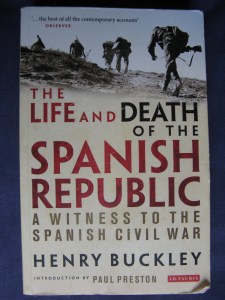
Henry Buckley                                 The Life and Death of the Spanish Republic

George Orwell                                  Homage to Catalonia

Ronald Fraser                                   Blood of Spain: an oral history of the Spanish Civil  War

fullsizeoutput_cf9

Women in the Civil War

Paul Preston                                        Doves of War: Four women of Spain

Angela Jackson                                   British Women and the Spanish Civil War

Jim Fyrth & Sally Alexander  (Ed.)  Women’s Voices from the Spanish Civil War

Judith Keene                                        The Last Mile to Huesca: an Australian nurse in the   Spanish Civil War

Nan Green                                            A Chronicle of Small Beer

Post-war Spain

Gerald Brenan                                     The Face of Spain

Ronald Fraser                                       The Pueblo

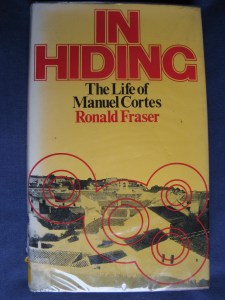
Ronald Fraser                                       In Hiding: the life of Manuel Cortes

Juan Eslava Galán                                Los Años del Miedo

Juan Eslava Galán                                De la Alpargata al Seiscientos

fullsizeoutput_cf8

The Guerilla

David Baird                                           Between Two Fires

 Legacy of the Civil War

Giles Tremlett                                       Ghosts of Spain

 Novels

Javier Cercas                                         Soldados de Salamina (Soldiers of Salamis)

Dulce Chacón                                         La Voz Dormida

Ángel Fábregas                                      Sulayr dame Cobijo

Almudena Grandes                               El Corazón Helado (The Frozen Heart)

Alberto Méndez                                     Los Girasoles Ciegos (Blind Sunflowers)

 Henry Buckley was the Daily Telegraph’s correspondent in Spain between 1929 and 1939. Based in Madrid but travelling widely, he witnessed first-hand the years of the Second Republic and the Civil War. His account, The Life and Death of the Spanish Republic, has the immediacy of someone on the spot throughout. Sir Paul Preston is the foremost authority on 20thcentury Spanish history and has written many books on the Spanish Civil War, including a biography of Franco. The Spanish Holocaust is a harrowing account of the war and its aftermath including the extra-judicial murder of around 200,000 men and women by the Franco regime. Doves of War: Four Women of Spain tells the fascinating and often tragic stories of four women involved in the conflict, two on each side. One of them is Nan Green, a communist who followed her husband George to Spain with the International Brigades and worked as a medical administrator. George was killed on the Ebro in 1938. She was an inspiring woman and her memoir, A Chronicle of Small Beer, makes compelling reading. For a concise history of the Civil War, I’d recommend Helen Graham’s The Spanish Civil War: a very short introduction. In I am Spain, historian David Boyd Hancock writes about the Civil War using the first-hand accounts of writers, artists, photographers and fighters from various countries who joined in the struggle against fascism. Unlikely Warriors   by Richard Baxell tells the story of the British volunteers, over 500 of whom gave their lives in the struggle. No Other Way, published by the Oxford branch of the International Brigades Memorial Trust, details the 31 volunteers, some quite famous, who had links with Oxford.

Angela Jackson examines the backgrounds, motives and experiences of women in the Civil War. Their involvement, whether as medical or relief workers, administrators, journalists or broadcasters, is also described, mostly in their own words, in the excellent anthology, Women’s Voices from the Spanish Civil War. Historian Judith Keene’s Last Mile to Huescais about Australian nurse Ada Hodgson and includes the diary she kept of her time in Spain.

Ronald Fraser’s oral histories, The Pueblo and In Hiding: The Life of Manuel Cortes give a fascinating picture of life during the long decades of Franco’s rule through the personal testimonies of one village’s inhabitants.

Between Two Fires describes life in the village of Frigiliana during the 1940s and 50s when quite a number of those opposed to the regime (and therefore under threat of imprisonment or worse) had taken to the hills and were conducting a kind of guerilla warfare with the Civil Guard. Local people were often caught in the middle, hence the title. David Baird, long resident in the village, uses many first-hand accounts to tell the story from both sides.

Juan Eslava Galán’s two books offer an ironic take on life during the dictatorship through stories peopled by fictional characters.

Ghosts of Spain by Giles Tremlett, formerly the Guardian’s correspondent, has lived in Madrid for many years and writes extremely well about contemporary Spain. The first part of the book, in particular, is about the legacy of the war.


Taking account of changing sexual mores

In writing a novel like The Red Gene with a time-frame that spans nearly eighty years and is set in two countries with differing cultures, attitudes to love and sex are one way of reflecting the changes and disparities in social mores. My three main characters, born in 1915, 1939 and 1975, respectively, one in England, the other two in Spain, have very different perspectives, due largely to the influence of the cultures they belong to.

Rose, born in the early 20th century, daughter of a Church of England vicar, has imbibed the conventional morality prevalent since Victorian times. Any departure from the acceptable norms of society carries a stigma, while the very real fear of pregnancy in the days before ready access to birth control is also a hugely inhibiting factor. Rose shivers at the thought of Clark House, a home for unmarried mothers in Oxford, run by Skene Moral Welfare. And of the disgrace an illegitimate child would bring on her parents. Jack is burdened with the intense shame of his own illegitimacy; another character must hide his homosexuality. War often breaks down social conventions and when Rose falls in love with Miguel in Spain after witnessing so many deaths at close hand, she grasps the fragility of life and how precious is love, and her inhibitions melt away.

Consuelo, growing up in the early years of Franco’s dictatorship, with the Catholic Church imposing its moral values and repressive rules on society, is reminded constantly of the penalties of sin. At home, at school, in church, in her compulsory attendances at Acción Católica or La Sección Feminina, the codes of acceptable behaviour are drummed into her, accompanied by warnings of the dire consequences should she stray from the correct path. The warnings start in childhood and increase further as she approaches puberty. From the age of thirteen, she isn’t allowed out without stockings, even in the summer; she must cover her arms and wear skirts that come well below the knee; she isn’t permitted to so much as speak to a boy… Meanwhile, her oldest brother Francisco considers her fair game and snatches any opportunity to sexually molest her. Another brother forces himself on one of the maids, leaving her pregnant, with the result that she is sacked in disgrace. As Consuelo notes, the rules are different for men. Her brothers openly frequent brothels. It is considered neither unusual nor immoral for men – whether married or not – to patronise these casade putas.

Courtship in the Franco years followed strict conventions. Novios were denied any time alone together; the chaperone (usually a family member) kept them in sight at all times. A brief, furtive kiss was the most that could be expected in 50s Spain. Consuelo is terrified at the prospect of her wedding night and feels only relief when the act is over. A couple of years later, she muses about the physical side of her marriage.

“They never talked about what went on in the bedroom. She relished the kisses and embraces, which kindled intensely loving feelings towards her husband, but the act that followed, though no longer painful as at first, was uncomfortable; she always felt relieved when it was over. Fortunately, Enrique’s performance rarely lasted long and, as the Sección Feminina book had promised, her husband quickly fell into a deep sleep, leaving her free to put in her rollers anapply her face cream. She still couldn’t quite shake off the notion that carnal relations were a mortal sin, even though the catechism stated that within the sacrament of holy matrimony, where procreation rather than physical pleasure was the aim, the act was sanctified. Enrique never asked if she’d enjoyed it; if he had, she would have lied rather than hurt his feelings.”

When the first northern European tourists begin to arrive on the coast in the 60s, with their bikinis and miniskirts, the repressed Spaniards are shocked. The men ogle, the women disapprove, worried about the effect on their husbands.

Marisol, growing up in the far more liberal atmosphere of post-dictatorship Spain, has a much more matter-of-fact approach to sex. For her it’s something to be enjoyed, not hung up about like her parents, who find it too embarrassing to talk about, preferring to steer clear of the subject and hope for the best with their daughters.

I’m of the opinion that when writing about sex, generally less is more. I don’t avoid it altogether but I do prefer to leave something to the imagination. Like most writers (I assume), I’d rather not be a contender for the Bad Sex Award.


Education in Spain during the Second Republic and under the Franco dictatorship

In the Spain of 1930, over half the population (and the great majority of women) were illiterate. More than a million children received no schooling at all. The nearest school might be more than two hours’ walk away and although there were plenty of families who thought it worth the effort in order for their children to receive education, not all were so motivated. Besides, the children were needed for agricultural work, often from a very young age. Miguel in The Red Gene tells Rose how, like many of the children in his village in rural Granada, he could only attend school after several hours of work on the land, starting before dawn and resuming after the school day finished. At certain times of the year like harvest season, all hands were needed, which meant half the children were absent from school.

The Second Republic, which put an end to the Primo de Rivera dictatorship and drove King Alfonso XIII into exile, was declared on April 14th 1931. It stood for democracy, progress and universal rights, a separation of Church and State. Under the Republic, power would rest with the people rather than the Army and the Catholic Church as before. The new constitution introduced agrarian reform, autonomy for the regions and recognition for their languages, reform of the Army to make it politically neutral, employment protection and equality for men and women. Universal suffrage was introduced for men and in 1933 this was extended to women.

fullsizeoutput_b69

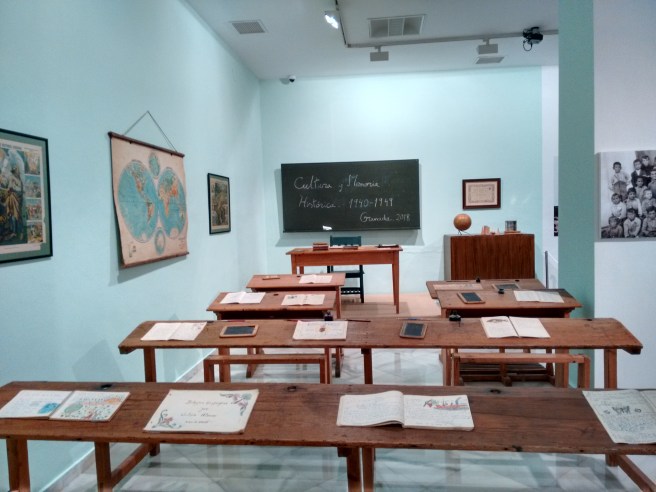
Education – previously the preserve of the Church – was seen as one of the most vital tasks, the cornerstone of all the reforms to be introduced. Under the new constitution, free universal education – secular, compulsory and mixed – was established. A literate population was considered essential for the working of the Republic. Only through education would citizens become emancipated. It was also seen as a way of uniting a divided society. Ambitious plans were drawn up to create thousands of new schools (7,000 were built in a less than a year). Miguel felt passionate about the Republic’s plans for education, joining others in the community to help in the construction of one of the new schools. While they were still being built, temporary schools were set up in any serviceable location – often a room in the Town Hall. To ensure that education reached the entire population, teachers were reimbursed for visits to people’s homes, including the most remote farmsteads and cortijos, where these itinerant teachers sometimes arrived on donkeys. Pedagogical Missions were set up to recruit and give proper training to teachers, most of whom had been up till then poorly educated and poorly paid. School inspections were introduced and teachers required to complete university-level courses. Their salaries as well as their status rose accordingly. They were regarded as the intellectuals of their communities and highly respected.

IMG_20180414_213928326_HDR.jpg

Education was generally seen as a great privilege. Not just children but older people too were offered opportunities to learn. The Republic encouraged all forms of culture. Clapped out lorries brought mobile libraries and museums, film projections and theatre productions (including García Lorca’s Barraca travelling theatre company) to far-flung villages so that the rural population did not miss out.

fullsizeoutput_c1f

Religious education had been the responsibility of The Compañia de Jesús. This was now disbanded and religious orders prohibited from teaching. Teachers were no longer obliged to impart religious doctrine. In fact teaching methods could not have been more different from what had gone before. Children were taken out into the countryside to study from nature; they were encouraged to participate in debates instead of reciting from memory; boys and girls shared the same classrooms and were educated in equal rights. The opportunity to progress from nursery school to university was offered to all, depending on ability, attitude and vocation rather than economic circumstances. Hardly surprising that all this was anathema to the Church and the fascist party, the Falange.

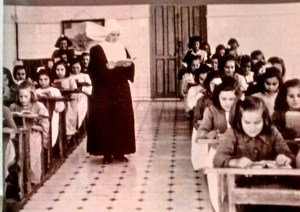
When Franco came to power, all these progressive educational policies were immediately reversed. Over fifty per cent of the teachers were either assassinated or went into exile. Responsibility for education reverted to the Catholic Church. Religious instruction in the morals and doctrine of Catholicism became compulsory in all schools, with inspections carried out by the Church. Regional languages were banned and pupils taught ‘patriotic values’. Mixed classes were prohibited, with girls’ education aimed at preparing them for their role as wives and mothers. The bachillerato end of school examinations ran on two tracks, thus ensuring social discrimination. This even extended to the uniforms worn by children of different classes. Consuelo in The Red Gene notes the striped uniforms worn by ‘the poor girls’, who play the same games in recreo but separately. Predictably, women’s right to vote was also abolished and not reintroduced until the new Spanish constitution was implemented in 1977.

fullsizeoutput_c43                      fullsizeoutput_c41


Tricks of time in life and in fiction

This month marks twenty years since I left England for Granada. The years are rolling by now at such a runaway pace I can scarcely believe it’s been two decades. My first year in Granada, on the other hand, felt more like ten. One of the great benefits of major change is the way time expands, the freshness of new experience lending every moment a savour that marks it out. That year, 1999, stretched out with a miraculous elasticity: a collection of discoveries, impressions, experiences like beads on a string, each one precious, if only for what it taught me. Striving to live wholly in the present, I learnt to use my senses more fully, to appreciate more.

The speed of time passing is one reason I dislike too much routine in my life. If you want to prolong time, routine is the enemy. Not that drawing out time is always desirable; sometimes I long to speed it up. When you’re in pain or waiting for something, time can drag interminably. I think the longest year of my life was the one following my miscarriage as I attempted to get pregnant again, my hormones screaming out their loss. Patience is not my best virtue but for a writer hoping to get published, it’s a necessity. Waiting for phone-calls, emails, other people’s decisions in any sphere of life can make every minute seem like an hour. Becoming a parent warps time similarly. There’s no comparison between the first month or year of your baby’s life (especially the firstborn) and a month or year when they’re at secondary school.

Time plays other tricks too, cruel or kind. Looking back on my own life as I work on my memoir, it strikes me just how crucial timing is in so many aspects of our lives. Meeting the right person at the wrong time or the wrong person at the right time can ruin a life. Catching the zeitgeist as a writer or any kind of entrepreneur requires astuteness but also an element of luck. Getting it right can make all the difference between success and failure. Accidents frequently happen through the tiniest of misjudgements. A split second when life and death are a mere hair’s breadth apart. Timing is all. The opening of my novel, Secrets of the Pomegranate, shows Deborah and her friend catching a train by the skin of their teeth. The train is one of four targeted in the 2004 terrorist attack in Madrid, ‘the train of death’ as the press (in real life) later termed it. Had they missed that train, there would have been no story.

Writing fiction entails making important decisions about how to deal with the passage of time. A novel can span a day or a century. As a writer, you can manipulate the passing of time to best suit your story. In Secrets of the Pomegranate, the action is condensed into four weeks, with the past conveyed through Deborah’s diaries, which go back twenty years. The Red Gene, only a little longer in word count, spans eighty years with protagonists from three generations. Maintaining the thread of the story when bypassing large chunks of time poses a challenge but omitting or skimming over the less eventful periods is the only sensible option. No one wants to read about the boring bits of the characters’ lives. (Would that in real life we could press a fast-forward button to skip the boring bits and a repeat or slow motion button for the good bits.)

Time can so often fool us, distorting the passage of time as we look back. Events that our brain places in the distant past may have taken place just weeks earlier if some dramatic interruption to our normal routine has occurred in the interim, while experiences from long ago may be so strong in our memory that they seem like yesterday. Watching a slide show of my overland trip to Kathmandu in 1974, taken by a fellow-traveller, transported me back to my twenties, the forty plus intervening years shrunk to nothing. My married years up to 1984, on the other hand, belong to a whole different lifetime.

Writing from the point of view of Rose, the central character of The Red Gene, I had first to get into the mind of a girl in her early twenties. Seeing life through her eyes as she aged and was moulded by the experiences that made up her story involved accompanying her right through to her nineties. Having worked with older people in the past (decades ago but still vivid in my mind) helped me portray Rose in old age. I don’t feel my age or I don’t feel any different were phrases I would hear almost daily. What is forty or sixty or eighty supposed to feel like? Time impacts people in different ways. Assumptions about age and attitudes to it differ from one culture to another and even in the same culture expectations of age change over time.

When I reflect on my twenty years in Granada, I don’t feel I’ve changed significantly although the world around me certainly has. The steep learning curve involved in settling in a new country has been tough at times but also energising. Maybe I’m a tiny bit wiser and know myself a little better as a result. I’ve become a grandmother (five times over). But do I feel my age? Of course not!