Forward into a New Year

Photo1796_001

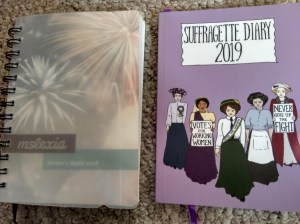
The year is coming to an end, another about to begin. In front of me lies a virgin diary. Its ruled divisions into days, weeks, months represent an uncharted future. Just as I did last year and the year before, I stare at the blank pages, wondering what will fill them. Will 2019 be good or bad or a balanced mix? Who will I meet? What unexpected events – personal or political – will mark it? Will my loved ones stay safe from harm? It sounds dramatic but can I even count on surviving the year? This year, amongst my friends, one was diagnosed with an already well-advanced cancer that came completely out of the blue to him. Another friend lost her partner, also due to an undetected cancer; he lived for only weeks from first diagnosis. But the future can also bring unlooked for miracles: hopes fulfilled, unexpected joys, triumphs over adversity.

The blank pages of a new diary have something in common with the blank page – whether on screen or paper – that faces a writer. The difference is one of agency. I have only partial control over what will happen in the year to come. World events, accidents, illness, freak weather, other people’s actions are beyond my personal control, whereas I can fill the blank page of my story, poem or novel with whatever I choose.
fullsizeoutput_bfc

As I began to jot down the first entries for 2018 at the close of last year– a family reunion in Wales for New Year, my return flight to Granada, the resumption of classes, lunch with my publisher – I had no intimation of what would intervene to derail some of these arrangements. No idea that my house would catch fire, forcing me to move out for a month. Not an inkling that one of the absurdly expensive hearing aids I depend on for communication would fall out and be irretrievably lost. Nor the slightest intimation that the publishing contract I’d secured a month earlier would, halfway through the year, be cancelled. (Had I known in advance that three months later it would be reinstated, my summer would have been a good deal happier.) The accumulation of all these unexpected events made a big hole in my finances that I could not have anticipated.

2019 will, I hope, be better. On the personal level I have the publication of my novel, The Red Gene, to look forward to in April. Soon I will begin planning the launch and, hopefully, more talks, presentations and interviews in the UK and in Spain. Will the spark for a new novel strike? Of the various half-formed ideas in my mind will one compelling project emerge? Or will I continue with and perhaps complete the memoir I am currently working on?

The Red Gene Amazon

On the global stage I am more fearful than at any time since the eighties, when the threat of nuclear war – by design or accident – appeared highly credible. I spent considerable amounts of my time during that decade campaigning against nuclear weapons. Now the dangers are multiple and I fear more for my children and grandchildren and their entire generations than for myself. I fear for the hungry and dispossessed of the world, the refugees and victims of war, of climate disaster and the poisoning of the environment. I am afraid in the face of rising fascism in Europe, east and west, and in America, north and south.

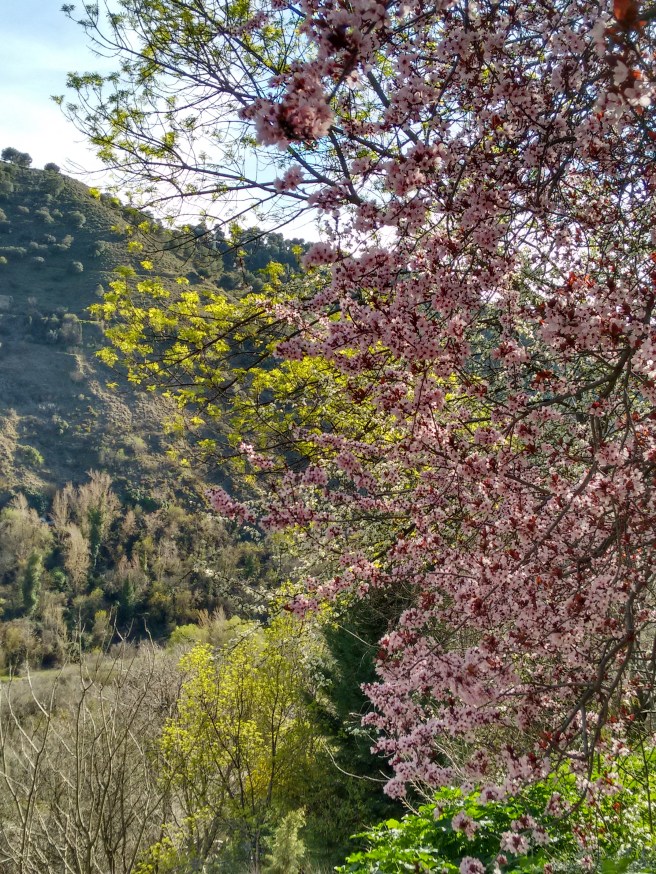
Those are depressing thoughts for the start of a new year but there is always hope in new beginnings, the renewed energy that comes with longer days and the budding of nature in all its forms. Change for the better is possible if we care enough and don’t give up the struggle.
IMG_20180329_182628227_HDR

To end on a lighter note, this coming New Year’s Eve I will make sure to don my red underwear – Spanish superstition deems it essential if you want to ensure good luck in the year to come. Needless to say, it slipped my mind on 31st December last year.

A HAPPY AND PEACEFUL NEW YEAR TO ALL
 

Censorship in Franco’s Spain

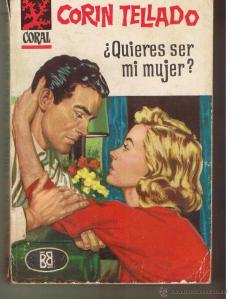
In my novel The Red Gene, Consuelo, born in 1939 soon after the start of Franco’s dictatorship and brought up in a family of the landed class fully supportive of his regime, has limited access to books. As a child, her reading matter is restricted to religious works like Lives of the Spanish Saints and approved classics such as Don Quixote. Later, her somewhat subversive sister-in-law passes her a handful of novels banned by the censor and smuggled in from Mexico, among them Gulliver’s Travels and Portrait of Dorian Gray. Romantic serials in women’s magazines and romance novels by prolific author Corin Tellado formed the reading diet of most women – if they read at all. Illiteracy levels, especially among women, were shockingly high until as late as the 1970s.

49060756

Censorship under Franco was imposed on literature, radio, film and television, music and public performances. The great majority of books submitted to the censor for approval were banned. The Falange and the Church had direct control of the process, acceptance being subject to conformity with Franco’s political ideology and with Catholic morality. At the end of the Civil War, most of the intellectuals and artists who had defended the Republic – those who had not been imprisoned or killed – had gone into exile. In terms of culture and art, it was a bleak time. Those whose creative endeavours were not inspired by the principles of Francoism – exalting the military ethos, Spanish nationalism and fundamentalist Catholicism – were liable to be persecuted.

Unsurprisingly, the Press came in for particularly strict curbs. Franco’s brother-in-law, Ramón Serrano Suñer, was placed in charge of press and propaganda. His Interior Ministry controlled all types of publication so that the news could be manipulated and used as a means of spreading propaganda. Republicans and communists were to be reviled. For example, at the end of World War II, newspapers were encouraged to play down Russia’s victories over the Nazis but extol those of the Americans and British. The directors of each newspaper were appointed by the regime and only approved journalists were issued with the press cards required to practise their profession. ‘Informative’ texts were sent out for obligatory insertion in the media. ‘Fake news’ is nothing new. The only written medium to escape government censorship was the magazine Ecclesia, the organ of the Episcopate and Acción Católica. In the issue of March 1944, they advised: No se debe leer, más que por inmoral, que lo es bastante, por repulsivamente realista. Reading was discouraged for its ‘repugnant realism’ as well as its immorality.

Actualidad_157746508_17172372_1706x1153

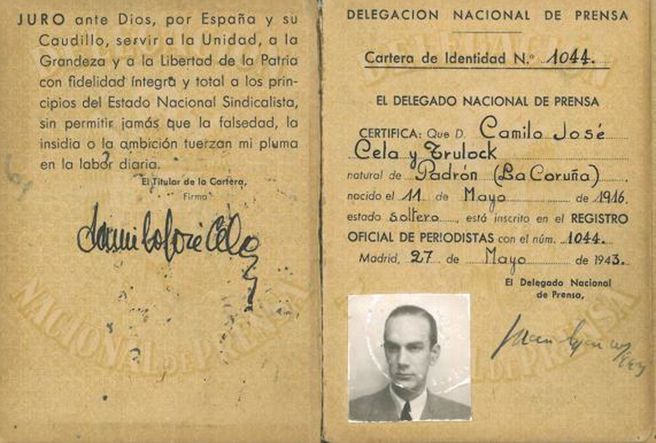
The censors, well paid by the Ministry, had to read every publication from beginning to end and indicate any part that infringed the law. To begin with, they were academics close to the regime. Later the task fell to untrained functionaries or in some cases writers (Camilo José Cela was one; ironically his own novel La Colmena, The Beehive, was banned in Spain until 1955 and had to be published first in Argentina). In the absence of any clear judicial guidelines, much depended on the personal prejudices – ideological or moral – of the particular censor and on his character or his state of mind at the time. It was the job of the illustrators of magazines and newspapers to retouch any drawings or photographs so that they complied with the requirements of Francoism and the Church. Usually but not always this involved the female figure.

pasionaria03

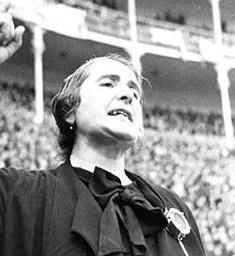
Radio Nacional España had a complete monopoly on broadcast news. However, at the suggestion of Dolores Ibárruri, ‘La Pasionaria’, the Spanish Communist Party set up a clandestine radio station, Radio España Independiente. Broadcasting from Moscow (and later Bucharest) every day between 1941 and 1977, it brought news from the BBC and Radio Francia Internacional in Spanish and was known as La Pirenaica, to give the impression it came from somewhere closer (the Pyrenees). Merely daring to tune in to the station was considered a sign of opposition to Franco. In The Red Gene, the local pharmacist in Consuelo’s community is arrested and imprisoned for many years after being caught listening to La Pirenaica.

estudio


images

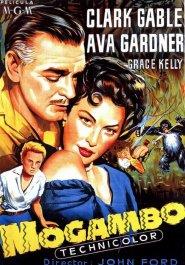
Films, especially foreign films, were an obvious target for censorship. Moral, religious and ideological content was tightly controlled, which frequently meant cutting scenes and manipulating dialogue (dubbing provided the perfect opportunity for this). Sexual content came in for particular attention. Actresses had their busts reduced and the necklines of their dresses raised so as not to scandalise their audience. Certain terms were forbidden, such as the words for thigh or groin or for items of underwear. ‘Lewd’ kissing, over-effusive demonstrations of affection, states of undress, uninhibited dancing, divorce and adultery were among the objects of the censor’s scissors. This was at times taken to extremes. For example, in the 1953 John Ford film Mogambo, starring Clark Gable, Ava Gardner, Donald Sinden and Grace Kelly, dubbing transformed the lovers into brother and sister – a change that left Spanish viewers watching the original footage somewhat puzzled. Adultery had given way to incest. During the early years of the regime, any actor or director who had expressed sympathy for the Republic was blacklisted. The list included twenty-nine Hollywood stars, among them Charlie Chaplin, Bette Davis and Joan Crawford.

mogambocartel1

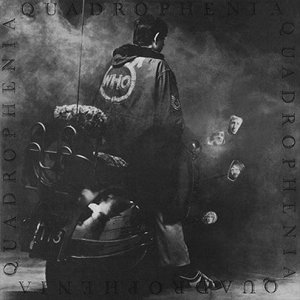
Theatre and music were similarly controlled. Theatre companies had to subject their plays to the Board of Censorship for Theatrical Works, which could change dialogue or entire scenes or ban the work completely, besides changing details of the set design, the costumes or the sound track. With regard to music, some Spanish artists were considered a danger to the regime and blacklisted, while foreign singers and groups were strictly censored. Four million songs were vetoed on radio and television; album covers like the Rolling Stones’ Sticky Fingers, the Who’s Quadrophenia and David Bowie’s The Man who Sold the World were embargoed.

who-quadrophenia-410-cover

Another form of censorship was the prohibition of regional languages in favour of castellano and the repression of regional cultures in order to impose national uniformity. This often involved manipulating history so that it bore little relation to the facts. Journalists in any case had little opportunity to inform their readers truthfully. As everything had to pass through the filter of Francoism, citizens were offered only a partial view of reality. In 1966, the Press Law of 1938 was replaced by the Fraga Law, named after the Minister of Information, Manuel Fraga. Although the new law appeared more liberal, in practice transgression could result in financial sanctions, confiscation of editions or closing down a publication completely, creating a climate of self-censorship among writers and editors. Only after Franco’s death was censorship finally abolished.

Placing myself, placing my novels

Sometime in the next few weeks I will take a bus to Málaga and collect my German citizenship papers from the Consulate there. As if having two identities, two countries I can call home is not enough, I am about to acquire a third.

spain-flag-small          flag-400      germany-flag-small

In 1933, my father, who came from a secular Jewish family in Berlin, left Germany and headed for London. It proved a wise move. He studied and qualified for a new career, changed his name to one that sounded more English and when the Second World War broke out, joined the British army. After the war, he married my mother, also from a European background. Both had by now acquired British nationality. They had three children and lived a more or less conventional life. No German was spoken in our home, we were all baptised and sent to Sunday School; we felt as English as anyone else. In fact I took great pains to conceal my parents’ foreign origins. To be German in the fifties – not so long after the end of the war – was to be associated with the baddies of comics and playground games.

How could I ever have foreseen that in my late sixties, I would be applying to become a German national? For twenty years now I have had a foot in two countries, but neither of them is Germany. The bigger footprint is in Spain, where I’ve lived since 1999; Granada is the place I call home. And yet I still have a stake in the country of my birth. All my family are there; I fly over frequently to see them. I am still more at ease speaking English than Spanish. My sense of humour is more English – and probably a slight eccentricity too. But this split identity does not include Germany. I’ve been there three times, the last in 1974 on my way to Kathmandu. I studied German at school up to A-level but have rarely used it since. However, with a chaotic Brexit looming, I am liable, along with several million others – Britons resident in Europe and Europeans resident in Britain – to have my whole life overturned if the UK ceases to be part of Europe. Spain does not allow dual nationality; Germany does. So when the German government offered citizenship to the descendants of all those forced to flee by the Nazis, it seemed only sensible to apply. Together with other members of my family, we assembled the necessary documents and sent them off. My siblings and their children, my son and even my Scottish grandchildren have duly been granted German nationality. How ironic that the country my father fled has now made me one of its citizens with the right to a passport.

flag_yellow_low

I don’t expect to become German in any meaningful sense. It will ease my life by helping avoid visa applications, border queues and other bureaucratic obstacles whenever I travel to or from the UK. Perhaps I will visit Berlin and explore the city of my paternal roots. Perhaps I will try to brush up my German. But understanding and feeling at home in two cultures is hard enough; I don’t think I could start from scratch with another. Adapting each time I move between my two countries is a disorienting process. The switch from one language to the other is the least part of it. Much trickier are the cultural and lifestyle disparities – more pronounced than I would ever have imagined before I came to live in Spain. The differences shout out at me every time I go back: attitudes to personal space, to touch, to punctuality, to noise levels, to what is regarded as tolerable and what is beyond the pale. The different timetable for eating and sleeping disrupts my body rhythms; I roam the supermarkets bewildered by the vast range of ready meals, shocked at the prices. I feel like an outsider.

When I lived in Britain, the novels I wrote had British settings. The culture was familiar; I’d been immersed in it all my life, absorbed it from birth. But cultures don’t stand still. After ten years or so in Spain, I found I was out of touch with 21stcentury Britain. I could no longer write convincingly of contemporary life. The cultural references familiar to my family and British friends meant nothing to me. Yet setting my fiction in Spain also posed problems. I could write from the viewpoint of guiris, the foreigners resident in Spain, as I did in Secrets of the Pomegranate. The three main protagonists in that novel were English by birth. To write from the perspective of Spanish characters, whether historical or contemporary, presented a much greater challenge. It felt imperative that what I wrote should be authentic enough to convince Spanish as well as native English readers. But did I have the necessary in-depth understanding of the Spanish mind-set and culture, contemporary and historical? After all, I was an outsider here too.

In writing The Red Gene (to be published April 2019), I took on this challenge. Twenty years of living in Spain have given me some insight, or so I like to think. In addition, for the historical parts in particular, I researched widely, reading extensively in Spanish as well as English, watching Spanish films, talking to Spanish friends. However, what helped most, without a doubt, was interviewing older people, recording the small details of their lives as they remembered and recounted them, as they told me their stories. I am immensely grateful to all of them.

Over the years, I have developed a keen interest in the history of my adopted country, in particular its more recent history: the 2nd Republic, the Civil War, Franco’s dictatorship. Learning more about the part played by the International Brigades who came to support the elected government in their fight against fascism led me to wonder if my father had ever considered joining the Brigades. They had a large contingent of Jews – several thousand – from the East End of London, from the United States, Hungary, Germany and above all Poland. Many of them were communists or socialists alarmed by the rise of anti-Semitism. According to some estimates, 70% of the medical volunteers were Jewish. My father wasn’t the fighting type and he’d studied law, not medicine, so it’s unlikely he would have considered it, but he may well have had friends who did. He would certainly have been aware how important it was to support the Spanish Republicans in their fight against the rebels, who without the help of Hitler and Mussolini would not have succeeded. How I would love to have discussed all this with him but he died in 1972 when I was barely grown up. Neither of us could have anticipated that I would develop such an interest in 20th century European history or that the war in Spain would form the background to a novel I would one day write.

fullsizeoutput_b68

Edinburgh Book Festival: my annual treat

Whatever the competition from screen-based forms of entertainment, books show no sign of losing their popularity and the burgeoning of literary festivals bears this out. I love these events, love being surrounded by books and readers and writers. August invariably finds me in Edinburgh, where my son and his family live. For at least a week every year I have all the cultural riches of Edinburgh’s Festival, the largest arts festival in the world, at my disposal. But for me it’s not the four thousand or so acts of the Fringe that compete for my attention and money. Rather, it’s the International Book Festival that seduces me every time. It feels like my natural home and I come away from each talk exhilarated, inspired and wishing I had all the time in the world to read and to write. With hundreds of events and speakers from over fifty countries, Edinburgh Book Fest is always stimulating, thought-provoking and entertaining.


c4b08cfa

images

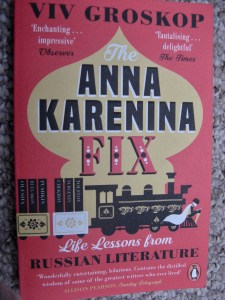
One talk I attended this year had the sea as its pivot, ranging from migration and the tragic loss of life in the Mediterranean to the plight of sex slaves and drug mules at sea and the environmental damage to the world’s oceans. Another focused on Jewish fugitives in the 1930s and 40s, with two writers – one Icelandic, the other English but of Hungarian Jewish descent – speaking about their new novels. My vote for most entertaining was the talk by Viv Groskop about what led her to write her book, The Anna Karenina Fix, which attempts to use the Russian classics as a reference point for solving all life’s problems. Want to know how to survive unrequited love? Read Turgenev’s A Month in the Country. Struggling to overcome inner conflict? Read Crime and Punishment. And so on.

fullsizeoutput_b53

Literary festivals happen all over the world, from Gibraltar to Jaipur, and wherever they take place, there is always that same incredible buzz. I suspect a fair number of their enthusiastic fans not only read but also write, gaining inspiration from their favourite authors just as I do. Over the years, I’ve been to many literary festivals and heard numerous authors, some famous, others less well-known. At Cheltenham in the mid-90s, only a couple of years before his death, I was privileged to hear Laurie Lee talk with eloquence about his Spanish experiences as a young man, and it was there too that I listened to Yevtushenko reciting his poetry in the original Russian, his voice stirring and passionate, his eyes blazing with intensity. (His 16 year-old son read the English translation rather less dramatically). Jeanette Winterson, Maggie O’Farrell, Ian McEwan, Sue Townsend, A L Kennedy and the late Helen Dunmore are among the many authors I’ve heard talk about their writing processes and sources of inspiration.

51Xqy-zKNbL._AC_US218_

fullsizeoutput_b5a51VVfvS2tIL._AC_US218_

One thing I love particularly about Edinburgh’s Bookfest is that alongside Nobel and Booker Prize-winners, leading politicians and thinkers, debut authors are given a voice and a chance to promote their books. Each year, particular themes are chosen, always with an international perspective. This year they included Freedom and Equality, Identity, Politics for Change and Our planet and us. However, this year more than any other, the Festival was hit by visa problems. A dozen of their invited speakers, mostly from the Middle East and African countries, were refused entry to the UK after a humiliating process that involved submitting three years of bank statements, even though these authors had their costs guaranteed by their publishers and the Festival and were being paid. Womad musicians had experienced similar problems earlier in the summer. How sad that even cultural events like music and literary festivals should suffer from the ‘hostile environment’ that has taken over in Britain. Depriving us of non-native  artists, many of them highly acclaimed, can only serve to impoverish our culture.


Writing a Memoir

When I enrolled on a one-week memoir-writing course last March, I had not seriously considered writing about my own life. What I had in mind was giving myself space to think creatively and with luck finding inspiration for my next novel. I also felt in need of some relaxation in a peaceful, nurturing environment, after what had been a challenging start to the year.

Five months on and to my great surprise, I am well into writing a memoir. The course, at Cortijo Romero in the Alpujarras, was led by Rosie Jackson, a poet, writer and experienced teacher. Her facilitation, along with the contributions of ten interesting and talented fellow students fired me with enough enthusiasm to explore the idea further. Taking time to reflect on our lives and write short pieces – scenes from our childhood or later episodes that proved to be turning points – had triggered a process in all of us, a search for meaning and connection, as memories, some of them long buried, began to surface.

I set about reading the memoirs of other writers, including Rosie’s own, The Glass Mother. I had already read Maggie Gee’s My Animal Life and more recently, Bella Bathurst’s Sound, which described her experience of going deaf at twenty-eight. (On the course, I had written for the first time about my own early loss of hearing and been touched by the other participants’ empathy and interest.) I read Jeanette Winterson’s Why be Happy when you could be Normal? and Rose Tremain’s Rosie, learning from all of these.

Twelve years ago, I had written a kind of travel memoir about my move to Spain and my impressions of the country. Single to Granada was never published but returning to it now, I found parts of it served well as an entry into a fuller and deeper interpretation of my life. It gave me a theme – migration – that connected naturally with my family history.

Writing about my life has been an eye-opening process, prompting a period of self-examination and deep personal reflection. The mind plays strange games, frequently surprising me with long-forgotten incidents from my past while others elude me. With the memories come newly awakened emotions: guilt, anger, sadness, regret, as well as gratitude for the times of happiness and good fortune. I had not expected this profound interior journey as a side-effect. Trying to make sense of my life, I’ve found myself exploring different ways of accounting for it. How much is determined by genetics, how much by childhood influences? Some might scoff, but could astrology, the configuration of the stars at my birth have played any part? So much that has happened in my life seems down to pure chance.

Although I’m finding my story more interesting than I expected, the motivation to publish remains tenuous. Who would want to read about me? I’m not famous; my life has perhaps been more colourful than many but hardly exotic or of great significance. And I’m a very private person. How can I possibly expose myself in such a public way, reveal secrets I’ve guarded for decades? Looking back, I’m not always pleased by what I see. Writing a memoir is not like writing a novel. In a memoir I am the protagonist, there is no disguising myself as a fictional creation. To be worth anything, it has to be honest. True, I can choose what to reveal and what to stay silent about, but hide too much and the danger is that what I produce will be so bland and boring that no reader will engage with it.

It also feels wrong – vain and self-indulgent – to be looking inward at my own inconsequential life when there are so many causes to fight for. My own migration, embarked on by choice with little risk and no hardship, pales in significance besides the tragic stories of today’s desperate migrants and refugees. In my novels I have addressed what seemed to me important topics – through a story, because that is often the best way to emotionally engage an audience, but with underlying themes that add depth and have some kind of moral relevance. A memoir would serve no such purpose. However, until inspiration for a new novel carries me off in a different direction, I’m happy to continue with this exploration, leaving aside for the time being the big questions of why I’m writing it, who it’s for and whether to publish.

Can fiction help change our perception of refugees and migrants?

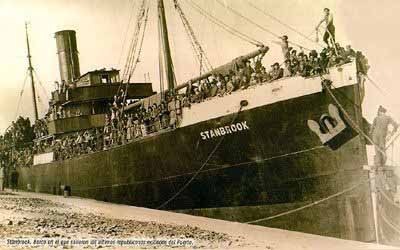
As we watched the hulk of the overloaded ship finally cast off into the dark, carrying our hopes with it, the chimes of some distant church clock reached us faintly through the damp night air. Twelve o’clock. Time, which had been measured only in the slow forward movement of the throng, now took on a different meaning as a collective slump of despair spread through the thousands still waiting at the port. A seemingly impossible number of refugees had succeeded in boarding the British ship. But now the Stanbrook had gone, tilting low in the waterand we were left stranded, at the mercy of the cruel victors whose arrival could not be far off. How much time remained?

Children were crying, an old man standing near us cursed the fascists, yelling his abuse into the darkness while his wife made futile attempts to calm him. Rumours of rescue passed in forlorn wisps from one group to another, forming and dissolving like ripples on the ocean. But mostly people were silent, exhausted by days and nights on the road, trudging with as many of their possessions as they could carry, defeated, despairing, afraid.

The above was an early draft of the opening paragraphs of The Red Gene. I was still experimenting with possible scenarios, still deciding where to situate my protagonists as the inevitability of a Republican defeat in the Civil War became clear. In the end, I discarded it and took the plot in a different direction; I set Rose and Miguel elsewhere as they faced the prospect of imminent victory for Franco. But the scene I described, in the port of Alicante, was realistic enough by all accounts.

stanbrook

Fifteen thousand people had gathered at the port in the hope of escaping Franco’s forces. The Stanbrook was captained by Archibald Dickson, a Welshman who left his cargo of oranges and saffron on the dockside and instead allowed two and a half thousand desperate refugees to board his vessel, occupying every inch of space above and below deck. Leaving the port, he had to brave missile attacks from the rebel destroyers forming a blockade there. The Stanbrook took its shipload of refugees to Oran in Algeria, where they remained on board for a month in dire conditions before being allowed to disembark. They ended up in internment camps but at least they had escaped Spain.

Those refugees were the last to leave. As thousands more continued to join the waiting crowds over the next few days and no more ships arrived, many committed suicide, drowning or shooting themselves. The rest, some forty-five thousand, were rounded up by the Italian troops fighting on Franco’s side. Families were forcibly separated (does that ring any bells?). The women and children were packed into a cinema, where they had no access to water for washing and virtually nothing to eat, while the men and older boys were taken to the bullring or to an almond orchard known as Los Almendros, basically an improvised concentration camp. Later they were moved to another camp at Albatera where once again they had to sleep in the open with no protection from wind or rain, where they were deprived of food and water beyond a minimum – scarcely enough to keep them alive – and forced to work in the salt marshes. They were frequently beaten; many died of fever or starvation; others were shot, supposedly trying to escape.

During the course of the war, a steady stream of refugees had been heading over the French border as different regions fell to Franco’s rebels. By the time it became clear, in early 1939, that all hope was lost for the Republicans, nearly half a million had fled across the Pyrenees into France. They fared little better than those trapped in Spain. Interned in camps and held in intolerable conditions, large numbers died of cold, malnutrition or disease. Of those who survived, thousands were later transferred to German concentration camps, the majority to Mauthausen, where most ended up in the gas ovens.

Some, however, had better luck. Mexico, one of the few countries to welcome Republican refugees from Spain, sent ships to France, the first being the Sinaia in 1939. During the next three years, Mexico took some 25,000 of the Spaniards who had fled over the border, liberating them from the French camps. On arrival in the port of Veracruz, their passengers were given a heroes’ welcome.

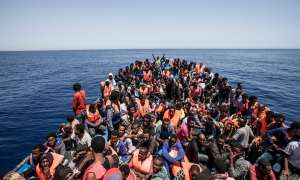
Nowadays the prevailing image of refugees is of black or brown people fleeing from Syria or Afghanistan or Iraq or sub-Saharan Africa. Europe is fortifying its borders against the invading hordes, as many see them. It’s too easy to forget who started the wars or caused the environmental destruction that forced these people to flee. What does it cost to leave your home, your family and friends, your possessions, your country; to embark on a journey you know will be fraught with countless dangers; to expose your children to those dangers? How does it feel to be greeted – if you finally succeed in arriving in a safe country – by hostility and suspicion; to be locked up in a detention centre, deprived of basic human rights and any semblance of dignity; faced with the threat of being sent back where you came from? Who would do it other than as a last resort?

1280

Memories are so short. We are all potential refugees. Eighty years ago, the exodus was in the opposite direction: refugees were fleeing Europe from Hitler or Franco. It could happen again; any minority group is at risk. Right now, sixty-eight million people are displaced due to war or persecution, one in every 110 of the world’s population. The vast majority are in developing countries, their own or neighbouring ones. But since 1993, some 34,000 have drowned in the Mediterranean trying to reach Europe; countless others have died crossing the desert.

Politicians pander to populist opinion for electoral advantage, while much of the press influences that opinion by using dehumanising vocabulary to describe migrants and refugees. They exaggerate the numbers with terms like swarm and flood and invasion, designed to instil fear. Refugees are referred to as animals, cockroaches, criminals and terrorists, outsiders who do not share our ‘European values’. Hungary’s Victor Orbán has made it a crime to aid migrants and now the EU has ruled that NGOs should stop rescuing drowning refugees, instead leaving it to the Libyan coastguards. Who cares if they are left to drown? Or subjected to torture and slavery? European values??

It seems to me that not only journalists but fiction writers too could play a part here. Stories that give names and personalities to migrants and refugees are desperately needed to counter the depersonalising vocabulary of press and politicians. The image of a dead Syrian child, Aylan Kurdi, caught people’s imaginations and led to a call for more humane treatment of refugees (though the effect proved to be short-lived). Novels, poetry, plays, films could perhaps help change the opinions of those who see refugees as a threat. Every migrant is an individual with a history (often a tragic one), a human being who feels and suffers like any of us and just wants a life free from danger. It seems so obvious, yet it’s easy to forget. Reading about individuals, whether real or fictional, helps us to relate, to see the world through their eyes, feel their fear and despair, understand their hopes and dreams.

A turbulent life: asset or liability for the novelist?

A stressful few months have left me pondering whether a life beset by problems is useful for the novelist or whether what he or she needs is a tranquil, trouble-free existence safe from the intrusion of any disrupting influences. Do heartbreak and suffering in the author’s life make it easier to empathise with their protagonists, providing interesting experiences to draw on, or do these merely distract from the writing process? Isn’t writing a novel a difficult enough task without the interference of personal conflicts and dramas that demand to be dealt with?

Dickens had a hard childhood and a complicated domestic life, having married, only to become infatuated with his wife’s sister, who died not long after. Twenty-two years later, he left his wife and ten children for his much younger mistress. None of this seemed to hamper his creativity. With such a large family to support, he had to keep writing. Poverty was and still is a driving force for writers who need to sell books to survive. J K Rowling was a single mother on benefit until she made it big with her Harry Potter stories.

Many famous novelists (along with a great number of poets) were known to have been depressives: Mark Twain, Stephen King, Ernest Hemingway and Virginia Woolf among them. Alcoholism and mental illness are far from rare in writers. Scott Fitzgerald, for example, was an alcoholic, his marriage with Zelda notably stormy. Hardy too had a difficult relationship with his wife Emma. As a shy and secretive man, writing served as a catharsis for him, an outlet for his grief and mental torment. His emotional state was reflected in his novels. Because he drew on his own life for material, the later works tend to be sadder than those written earlier in his career.

The Bronte sisters had seclusion aplenty in childhood but their lives were plagued by ill health and far from easy. Charlotte Bronte, the last surviving child of Patrick and Maria, suffered one family bereavement after another, losing her mother from cancer and one by one, her brother and each of her sisters, who all died in their thirties from TB or other illnesses. She also knew the heartache of romantic disappointment, having suffered unrequited love for her teacher in Brussels. Writing provided some solace for all these losses but she herself died at 38, not long married and in the early stages of pregnancy. George Eliot led a somewhat happier life but as a woman with unconventional beliefs and lifestyle, she certainly didn’t have it easy.

Tolstoy, on the other hand, was at his most creative and successful in a period of his life that was also the happiest and calmest – during the first ten years of his marriage. Many of the characters in War and Peace were based on family members, friends and acquaintances and his novels contained a great deal of biographical material drawn from the detailed journals he kept.

Love can be inspiring. In my experience, a good relationship gives enormous creative energy. A bad one saps your energy and kills creativity. Rejection, anger, jealousy, grief can have a crippling effect. Alternatively, they may help you empathise with your fictional characters. After all, the basic human emotions are universal. It may be a matter of timing. The difficult or challenging times should, ideally, come between novels, not when you’re in the thick of writing them, when they are indeed a huge distraction. However, writing can also provide a welcome escape from your problems. If you can cross that threshold into the fictional world you have created and become absorbed in it, life’s troubles can be forgotten for hours at a time.

Those who lead solitary lives – lighthouse keepers or national park rangers, for example – often turn to writing. Solitude gives space to the imagination and a rich inner life may be just as stimulating to creativity as the constant hustle and bustle of the world most of us live in. The popularity of writing retreats attests to the importance of time spent alone.

Among the reviews of Secrets of the Pomegranate, the comment that pleased me most was ‘This is a writer who understands people’. Perhaps if my experience had been confined to one happy, stable marriage with emotional and financial security, few challenges or setbacks, the urge to write would have been less strong. Although I feel extremely fortunate in most ways, my life has had its share of ups and downs. If I hadn’t known the anguish of a miscarriage, the stress of divorce, the sadness of losing the love of my life, the trauma of going deaf, my writing would have lacked that understanding. Even in fiction, I am writing from the heart.

Pardon? What did you say? Could you repeat that please?

Had I known when I made the decision to move to Spain in 1999 that in little more than a year I would lose a substantial part of my hearing, my courage might well have failed me. As it was, the sudden loss – possibly due to a virus though no one could say for sure – came completely out of the blue.

Spain is one of the noisiest countries in the world; shouting is considered perfectly normal. But now, quite mystifyingly, everyone was speaking in muted tones. I found myself constantly asking people to repeat their words and even when they did, struggling to make sense of what they were saying. Most people assumed I couldn’t understand Spanish and dredged up their smattering of English in an attempt to get through to me. My students of English assumed their pronunciation was at fault and lapsed into an embarrassed silence. But language wasn’t the problem. When I returned to England for the summer, the same happened there. Voices were, if anything, even softer. In England they don’t shout.

Friends assured me wax must be the cause – an explanation I embraced with huge relief. I refused to even consider I might be going deaf, as a less tactful friend had suggested. Not at fifty-one. Not me. Deafness was something that happened when you got old. It made you the butt of jokes, often involving ear trumpets. It implied stupidity. No, I couldn’t possibly be going deaf. I made an appointment to have my ears syringed. It didn’t help.

So, reluctantly I subjected myself to a hearing test. Now there was no escaping the truth: irreversible nerve damage combined with conductivity loss, resulting in a significant deficit of hearing that was only likely to worsen with time. The sooner I got fitted with hearing aids, the better. The idea of having to walk around with clunky contraptions in or behind my ears appalled me. I wasn’t ready to admit to this disability. In the young city of Granada, my advanced age was already an embarrassment; hearing aids would only serve as a visible reminder of it, even if my hearing loss was not age-related, as the audiologist affirmed.

With my new hearing aids sitting neatly inside my ears, thankfully hidden by my mane of long hair, I expected communication to be easier. They did help a little but nothing like enough. My confidence was ebbing away. I felt helpless, disoriented, a nobody with nothing to say because conversations left me lost, clueless. Socialising became an ordeal; I could no longer cope with teaching; misunderstandings and faux pas – the inevitable result of (often wild) guesswork – made me want to run away and hide. The phone was even worse. I had to steel myself to answer or to make calls to anyone other than family or close friends.

With each six-monthly test revealing a further deterioration, I graduated on to hugely expensive digital aids that were supposed to deal with any environment, focusing on the voice and muting background noise, for example. Unfortunately, the technology – though improving all the time – is not yet quite up to the job. I still feel helpless in most social situations. Every so often, advertising material from hearing aid purveyors is delivered to my house or my email inbox, giving dire warnings of the consequences of hearing loss: depression four times more likely, dementia five times. Cheers, that’s really great to know.

IMG_20180420_144306

Inability to hear has even penetrated my dreams. Frequently, when people speak to me in dreams, their words reach me as an incoherent blur – just as in my real-life encounters. The difficulty is not just volume but also clarity. It’s about filling in the missing sounds or the missing words and using your brain to interpret the likely message. My brain is filling in more than I’m conscious of, running in overdrive to supply possible meanings. Guesswork is effective to an extent, as long as the other person doesn’t change the subject. Inevitably it’s more difficult when the language is not your native tongue. I find myself dominating conversations – a tactic quite out of character for me – in order to control and keep track of the subject. Talking is so much easier than listening.

While hearing might not seem of vital importance for a career as a writer, it certainly presents problems. Interviewing, whether for newspaper/magazine articles or as research for a book is challenging, being interviewed even more so. I cringe remembering the telephone interview (in Spanish) with a journalist from my local daily newspaper just after my novel was published. I had asked for the questions to be sent the previous day but this, apparently, was impossible. When your hearing is impaired, phone-calls are always harder than face-to-face meetings. I had assumed the interview would be written up as an article based around the questions and answers. Instead, what I read was a direct transcript. It was successful in that many people in Granada read it and said they hadn’t noticed the mismatch between question and answer. I suspect they were being kind because to me it was glaringly obvious that my answers didn’t always correspond to the questions asked. There are also the launches and presentations, when it’s customary to invite questions.

The temptation when you can’t hear is to withdraw into yourself, to turn off. Or worse still, to stay in the comfort and safety of your home, free from the anxiety of having to communicate. Striving to hear is exhausting and if you’re tired you hear less well. After a few hours in company, I’m desperate for some downtime on my own. On the other hand, I know it’s bad for me to spend too much time alone. I need other people; I need stimulating conversation and laughter. Isolation is not the answer. So I will not give in to my invisible disability. I will continue to challenge myself – joining groups, attending talks, participating in events, meeting new people. Sometimes it’s a hopeless failure, but on other occasions I manage fine and when I do, the buzz it gives me is incredible. Like most people, I used to take it for granted. Now, the exhilaration of being able to enjoy a good conversation, one where I can hear everything, feels like a gift. I am grateful for the technology that makes this possible. It may not be perfect but without it I would be truly lost.

IMG_2646


Barbara_nocturno

The Mexican poet Francisco de Icaza wrote that nothing in life was so cruel as to be blind in Granada. Thankfully I am able to see and appreciate the beauty of Granada – its stunning architecture, its beguiling streets, the snow-capped mountains that form its backdrop. And I’m lucky that with the help of technology, I can also hear the tinkle of fountains, the babble of the river and the birdsong at dusk.

IMG_1827

Esparto weaving: a craft with a long tradition

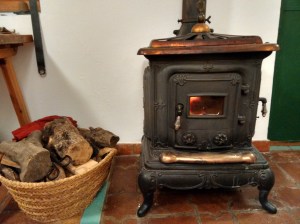
Next to my cast-iron, wood-burning stove, sits a basket where I keep the logs. It is made of woven esparto grass and I bought it in 2003 from a small shop in town, one of the old family businesses that in the last few years have closed down, giving way to food and drink outlets or souvenir shops aimed at tourists. The couple who owned it must have been born in the 1930s, perhaps during the Civil War. They would have known the hard times of the 40s and 50s when many families survived by gathering esparto, a kind of needle grass, from the sierras and crafting it into baskets or other products. Now, they told me, it was their son who made or commissioned from local villages most of the products crammed haphazardly on the shelves and floor of the shop.


IMG_20180320_194532514_HDR

IMG_20180320_194602637_HDR

Working esparto is a craft that goes back thousands of years. In 1857, over fifty mummies were found in a neolithic cave in Albuñol, south of Granada. The carefully worked esparto baskets, rugs and clothing discovered there show that the skills and techniques for crafting esparto have scarcely changed in nearly 7,000 years. The southeast of Spain (Andalucía, Murcia and Valencia) where much of the esparto grows was given the name Campus Spartarius by the Romans. Both they and the Phoenicians who preceded them on the Iberian peninsular used it for rope-making, the Spanish boat ropes being highly respected throughout the Mediterranean. For the Arabs of al-Andalus, halfa – the Arabic name for esparto – was also considered an important product.

Conchar is a village in the Lecrín Valley not far from Granada where until recently, esparto played an important part in the local economy – so much so that esparto plaits were even used as currency in the local shops. In fact it was a whole way of life, occupying everyone in the community, children included – especially on rainy days when work in the fields was impossible. Those too old to work might spend the entire day making esparto plaits.

esparto grass

esparto tools
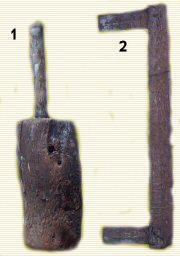
Esparto tools: hammer and measuring tool


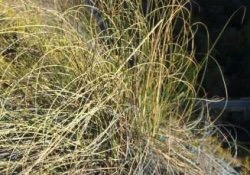
The tough, fibrous esparto grass that grew wild on the hillsides was pulled up using a small stick. A sharp tug would extract a bundle of it and the ends were rolled up on this. When about one and a half kilos (a maña or manada) had been collected, it was stretched out in the sun to dry. This unworked esparto was referred to as esparto crudo. It could be used ‘raw’ in the same way as wicker, but generally it was submerged in balsas or ponds for a month to ‘cook’ it – a fermentation process that eliminated the cellulose fibres. After being taken out and dried in the sun again, the esparto was beaten with wooden hammers called mazas to loosen the fibres, making it easier to work and preventing it snapping. When the crushed grass had been raked, it was twisted into plaits of a standard length. With practice, a plait could be made in an hour.esparto1

To be worked, esparto needs to be dry. However, drying it became a problem during the 40s and 50s when no raw materials were imported due to Franco’s autarky policy. Esparto was needed in the factories to make clothes and sacks so despite it being a centuries-old tradition, gathering esparto on government or private property was declared illegal. Ronald Fraser, writing about the village of Mijas in Málaga province, interviewed local inhabitants who spoke of the Civil Guard searching homes for contraband esparto. It was easy to detect because while the official esparto from Málaga was white and dry, the fresh illegal stuff was green. Spreading it out in the sun was obviously impossible with the authorities on the lookout for illegal picking.

In my forthcoming novel The Red Gene, there is a scene in the mountains of Jaén where Rose and her lover are hiding out after the Republican defeat in the Civil War: ‘Occasionally they came across villagers gathering esparto, the tough grass used to make baskets and alpargatas, but today there was no sign of human presence.’ And another scene where Consuelo’s family in Antequera are visited by a couple of Civil Guards: ‘They took off their shiny tricorn hats and talked about the problem of peasants stealing esparto grass from the countryside. Even putting them in a cell for a week didn’t stop them, one of the men said.’

The uses for esparto baskets in SE Spain were multiple. Different kinds – each with a distinct shape and plaiting method – served for collecting snails, for pressing the olive paste in almazaras or olive mills, for bringing fish from the boats… For example, the plaits could be sewn together in spirals for some kinds of basket, for others they were twined. Nor was esparto used only for baskets. Items as diverse as rope, wood pulp, paper, hessian for plaster, matting, water-carriers (proofed with pine pitch), donkey harnesses and panniers, cheese moulds and coverings for demijohns of wine, as well as a corduroy-type fabric for clothes, were made out of esparto grass.

IMG_20180325_112839885_HDR

Rope-soled shoes were the most common form of footwear in the countryside and are still worn. In Spain they are usually known as alpargatas but they have sometimes been referred to as esparteñas. In northern Europe, the French name, espadrilles, is more commonly used. There are several mentions of alpargatas in The Red Gene. Miguel’s uncle was the alpargatero in his village and taught his nephew how to make them. But as Consuelo observed, some were too poor even for alpargatas. They would go barefoot or wear rubber albarcas made from discarded car tyres.

Fire

My move to Granada on 7th January 1999 with a single suitcase (my bike and a few boxes were on the way separately) was daunting. I arrived alone and had neither home nor job to go to; nor did I have a single friend in the city. However, it was less traumatic and certainly less hair-raising than my arrival on 7th January 2018, following a Christmas visit to the UK. After 19 years, I had a home I loved, enough work and plenty of friends. I expected my homecoming to be as trouble-free as on every other occasion.

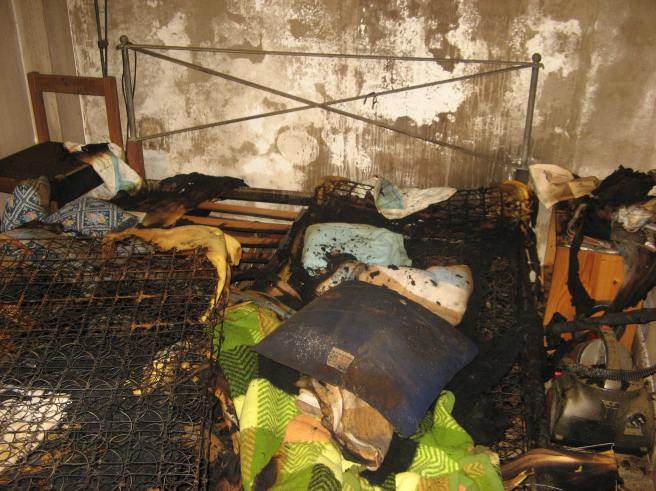
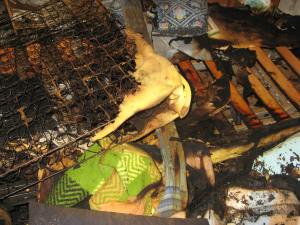
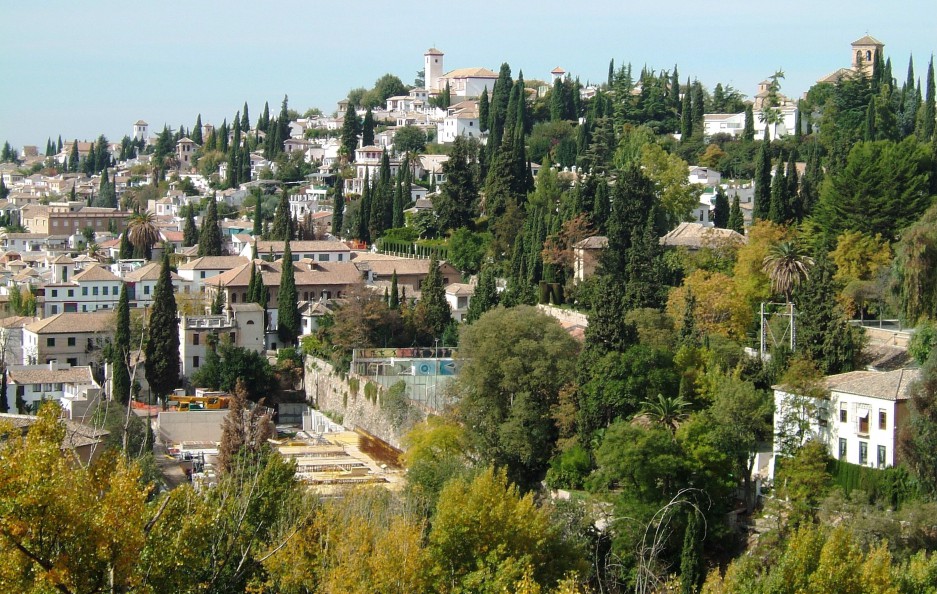
The drama began within half an hour. Granada is cold in January. There had been a substantial amount of snow the previous day and small heaps of it remained on my terrace and on the hills opposite. I lit my butano stove (piped gas hasn’t yet reached the upper Albaicín and Sacromonte where I live). Then I left the room, my lovely workroom cum spare bedroom (see my blog post, A Space to Write, from last October) to start unpacking. A couple of minutes later I smelt burning and entered the room to find flames shooting from the back of the stove and the bedspread alight. My first move was to turn off the gas and disconnect the alcochofa (the word for the regulator attaching the stove to the gas bottle means ‘artichoke’, an apt description in terms of its shape). With flames still issuing forth, I dragged the stove outside onto the terrace and tipped a handy bucket of rainwater over it. Returning indoors, I grabbed my laptop from the burning room, shut the door and called the fire brigade. By this time the whole room was ablaze. Just opening the door a fraction singed my hair. I waited outside with the local police, who had arrived to supervise operations and close the road below to allow the fire engines to park. Sacromonte, although close to the city centre, isn’t the most accessible of districts. My house can’t be reached by car, let alone fire engine, so it took half an hour for them to arrive and connect up their hoses from the road, while a small crowd of sightseers gathered.

IMG_2853

I am paranoid about backing up work in progress, indeed any documents or photos I value. Everything I write goes into Dropbox and sometimes onto a memory stick too. My computer is regularly backed up onto an external hard drive; I take no chances. The disaster I dread is a computer crash or a robbery (laptops are easy targets for theft). The possibility of a fire had never occurred to me. So the notes I took when I interviewed (mostly older) people as research for The Red Gene were all on paper, in a folder on the spare bed beside my desk. Consumed in flames within seconds, I imagine, certainly no trace of them remains. I could have photocopied them or typed them up to store digitally, but it never crossed my mind. Fortunately I have already incorporated much of the material into my novel. Even so, I am sad to lose the record of these fascinating encounters. I lost much else besides – probably 90% of the contents of that room: the bed and bedding, books and bookshelves, printer, my work desk and chair… I also lost treasured photos of my grandmothers, my parents, my children when they were little; pictures and mementos from my travels…

Black ash, smoke and water damage throughout much of the house, not to speak of the toxic smell, make for a depressing scene. But as everyone points out, it could have been worse. I was unharmed; I had insurance; all my important documents, many of my books, the vast majority of my photos and clothes were safe. The butano bottle could have exploded had I not disconnected it. All the same, the experience has left me shocked and feeling much more vulnerable, my confidence diminished.

IMG_2859

IMG_2854


The aftermath of repairs, cleaning up, replacement of contents, providing the evidence needed by the insurance company, is hugely time-consuming and tedious. Not a creative thought finds its way into my overcrowded brain. Without a car, I am reliant on friends to take me to the out-of-town stores where furniture, household goods and electronics are sold. Ordering online is an option I choose for some items but the courier companies find every excuse not to deliver to the narrow cobbled streets and idiosyncratically numbered houses of Sacromonte.

I am faced with countless decisions: do I replace the now terrifying gas heater with another similar model or choose an electric one that will cost much more to run and be less effective, and if so, what type? Friends and neighbours give me conflicting advice. Should I opt for a smaller bed and a larger desk? A tape measure is my constant companion. Can any of the burnt books be salvaged? How many do I want to replace? Never have my Internet searches focused so much on material objects. My life consists of shopping and little else. It is far too much all at once. Yet I can’t help wondering, will withdrawal symptoms set in after such an orgy of spending?

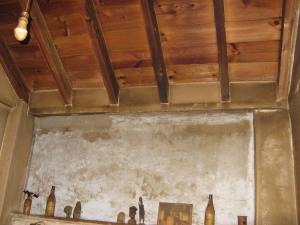
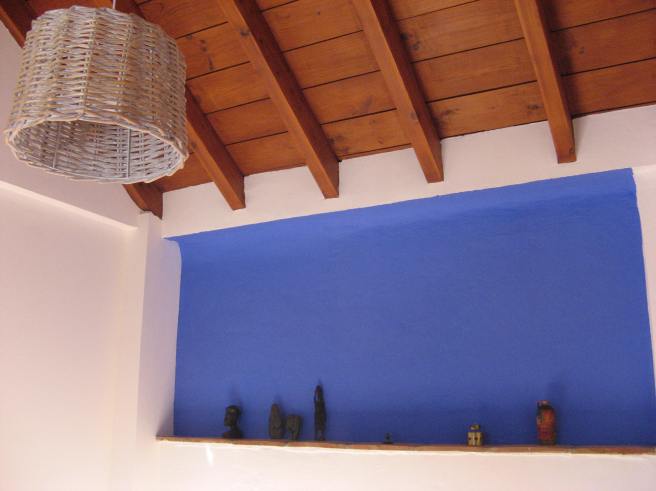
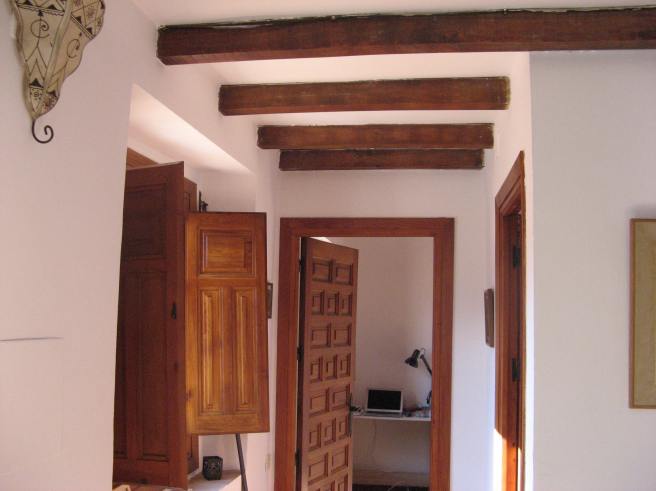
Three weeks on, my spirits begin to rise. The work is proceeding apace. Although the smell still lingers, it is no longer dominating. The beams, wooden shutters and window frames, cupboards and doors are looking good after being sanded and varnished; the walls are once again gleaming white (with the traditional blue in one alcove). Gradually I am replacing what I have lost – those items that are replaceable.

IMG_2860

I have been living in the rented apartment of friends since the fire, but today, after less than four weeks, I am moving back in. And now the house is restored, I realise how small and insignificant was my fire on the scale of potential disasters. Accidents to property are nothing compared to accidents to the person. Thinking of Grenfell Tower and the dozens of people who lost their lives in it, I feel ashamed to even consider myself unlucky. I am already largely recovered though still, when I see flames, however safely contained in a stove or fireplace, I tremble.

IMG_2865

Accidents of whatever type always happen without warning. Within seconds your life can change, be turned upside down, sometimes irrevocably. Our security cannot be taken for granted: danger lurks everywhere. Yet in 21st century Europe, we live in relative safety compared to the past and compared to many parts of the world now. In The Red Gene, my protagonist Rose must face being bombed and shelled as she nurses on the various battlefronts of the Spanish Civil War. For three years she lives in constant danger. The Red Gene is fiction, though the war was real enough. But in Iraq and Syria, Yemen and Sudan, among many other countries, countless people face death and destruction every day. Unlike my fire, they are not rare, isolated events. Maybe it’s no bad thing to be reminded by what feels like a disaster at the time just how lucky we are.