Memories and Anecdotes: a different kind of research

Writing a novel set in the fairly recent past in a country not my own but where I’ve lived for 18 years presents a few extra challenges. My work-in-progress (provisional title The Red Gene), spans the years between 1936 and 2012 and moves between various parts of Spain and England. Secrets of the Pomegranate was also set in Spain but, apart from the earlier diary excerpts, coincided with my time in Granada, which made it much easier: the setting was familiar territory.

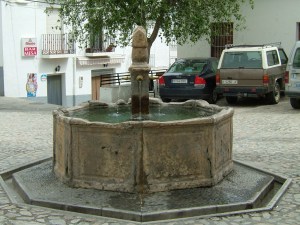
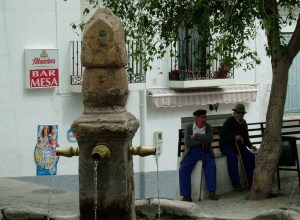
Before embarking on the writing of The Red Gene, I had to read widely, interview quite a number of older people (in Spanish) and trawl the Internet. But the need for research doesn’t disappear when you start writing. Almost every day, questions arise – minor details that have to be checked. Were boys and girls taught separately in Cañar’s school in the 1920s? When did they stop bandaging babies’ tummies after birth? Where did people in Antequera go for excursions on feast days and what food did they take? What do they call the fish-shaped banner carried in the Easter processions? With recent history, one needs to take particular care, as there are still plenty of people living who would spot any mistakes or anachronisms. Getting these finer points right is essential. As a reader I’m not only annoyed if I spot errors; I’m also less likely to be convinced by the story.
moorish-fountain-canar


canar

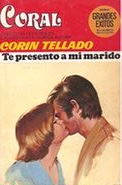
This is not unique to a historical or a foreign setting, of course. Every novelist has to check facts, chase up minutiae. Google and Wikipedia make research a lot easier but they have their limitations and that is where personal contacts come in. They are a rich resource, the key to more first-hand and anecdotal information. The advantage of having lived in Granada for so many years, building up friends and acquaintances (as you do), is huge. A word here or there is enough. If I’m not personally acquainted with a native of Cañar or a midwife, for example, someone I know will be. Someone will remember what books or magazines the older females in their family (those who were literate) were reading in the 1960s.
2560

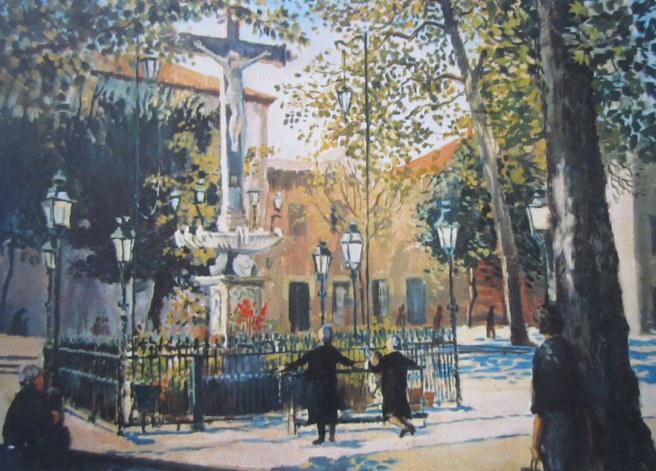
Knowing whom to turn to for the answers to all those small but important questions is vital. I would never have known from the usual channels about the women in mourning black who prayed to the Cristo de los Favores in Granada’s Realejo district had not my artist friend Allan Dorian Clark, who lived there in the 60s, told me (see his painting below). Nor about the poor people who lined up every Saturday morning at the house of a well-to-do businessman (Esperanza’s father) for a coin that would enable them to eat.
IMG_4342.JPG

I needed contacts for the English sections of the story too. For example, the father of Rose, my main protagonist, was a vicar. To glean more information about a vicar’s household in the 1930s and 40s, I consulted my friend John, whose father was a vicar in England at that time.

In Spain, my doctor friend Rosa could confirm that my account of dealing with a sudden heart attack in the late 1930s was realistic; members of my walking group knew in which areas the maquis (guerrilla fighters) were active in the years after the Civil War. The parents of my pilates teacher Javi are from Antequera, where Consuelo (another main character in my novel) grew up, and could give me an insight into life there during the dictatorship; Pepita, a midwife in the 1950s, could describe her travels to remote parts of the province to attend births. From Allan, who belongs to several of the religious cofradías (brotherhoods), I could glean an inside view of their activities.

img_1383

I have friends or friends of friends who come from families on the left and (a few) on the right. A bus driver from the village of Cañar, where the family of Rose’s lover Miguel lived, told me of two histories of the village written by natives, one a relative of his. I talked to Spanish nurses, to a retired labourer and to the daughter of a Republican who had disappeared into hiding for most of the Franco decades.

So in this post, I want to offer a massive thank you to all the friends and acquaintances who by furnishing me with the authentic detail I needed, helped bring my story alive.
Reading and Writing

A question often asked of writers is which books or authors have inspired them, so here are a few of my favourites, those that have been my inspiration since childhood. Some have influenced my life as well as my writing; with others I feel a particular affinity. Only when I began to make a list did I notice the common threads. Adventure and passion seem to run through many of them – from authors as diverse as Arthur Ransome and Thomas Hardy. So maybe my choice of reading also attests to the passionate feelings of a Scorpio, the Sagittarian love of travel and thirst for adventure (you may scoff at astrology but, just for the record, Scorpio is my sun sign, Sagittarius my ascendant). Social justice (or rather injustice) is another theme common to my choice of reading from early on. It’s a topic I feel strongly about and inevitably this is reflected in most of the novels I’ve written.

 The first real craze I remember was for Arthur Ransome. The adventures of the Swallows and Amazons captured my imagination as nothing before. Between the ages of about eight and eleven, I read and re-read every one of his books; acted out scenes from them with my friend Rita; learnt all the vocabulary and technicalities of sailing without ever setting sail in a real boat. We were Captain Nancy and Mate Peggy of the Amazon and I still remember the thrill of meeting ‘Captain John of the Swallow’ at the local swimming pool; we became instant friends. My father indulged me by taking us on a family holiday to Lake Coniston and hiring a rowing boat to visit Wild Cat Island. What was the attraction of these books? Adventure and independence perhaps, along with a love of water (my Scorpio side again). I saw the film of Swallows and Amazons recently, expecting a family audience, but the mostly grey heads proved that its appeal was generational. The books now seem overly dated: I didn’t even try introducing them to my children.

Another author whose books I sought out in the library as a child was Malcom Saville. When, years later, I moved to Shropshire, Stiperstones, the Devil’s Chair and other local landmarks were as familiar as if I’d known them all my life. At around the same age, I became a fan of Geoffrey Trease’s historical novels. I remember scouring the library shelves each week for new ones, disappointed by his failure to keep up with my voracious reading demands.

In my teens, passion about causes and strong emotions drew me to the novels of James Baldwin. Giovanni’s Room, The Fire Next Time, Another Country chimed with (and very likely helped foster) my abhorrence of prejudice, whether racial or sexual, in the less liberal society of the 60s. On a more personal level, Thomas Hardy’s doomed romances pulled at my emotions, echoing my own teenage heartbreaks. I was the tragic heroine and Hardy helped me put the blame for my romantic failures on cruel fate. A couple of years later, I discovered D H Lawrence and fell for the earthiness and sensuality of his writing.

In the 70s, feminist writers like Doris Lessing, Marge Piercy and Marilyn French dominated my reading and undoubtedly shaped my thinking to some extent. Class was another important issue for my generation (street cred depended on proving your working class origins, at least in the circles I moved in). It offended my inverted snobbery that many contemporary novelists seemed to write only about middle class characters in bourgeois settings so I was delighted to find Pat Barker writing about working class people in the down-to-earth community of Teesside, where my husband grew up. In my own writing, especially in my earlier novels, I deliberately chose ordinary people (in terms of class, not character) from humble backgrounds as my protagonists.

John FowlesThe Collector intrigued me and I went on to read The French Lieutenant’s Woman, The Ebony Tower, The Magus and others, impressed by the fact that each was so different. I’ve always admired those authors who show versatility rather than repeating the same formula. Another example is Rose Tremain, perhaps my favourite contemporary writer and one of my greatest inspirations. The Cupboard, Letter to Sister Benedicta, Music and Silence, Sacred Country, The Colour, Restoration, The Road Home: what do they have in common? Very little except great writing, psychological insight and empathy, the skill of drawing the reader in to characters, setting and story. With Maggie Gee, it was our common themes and concerns that struck me first. I was well into writing my anti-nuclear novel when The Burning Book came out. Grace was a novel loosely based on the unsolved Hilda Murrell murder in Shrewsbury that with its disturbing political ambiguities preoccupied many of us locally at the time. The White Family dealt brilliantly with racial prejudice, through the lives of an ordinary English family.

My love of adventure and romance as well as his beautiful poetic prose made it inevitable I should fall in love with Laurie Lee. It may even have subconsciously influenced my decision to move to Spain many years after first reading his books. India was another country that fascinated me and I lapped up writers such as V S Naipaul, Arundhati Roy, Rohinton Mistry and Vikram Seth. In the meantime, I had become a travel writer myself.

Although Philip Pullman’s His Dark Materials trilogy was aimed at young readers, it captivated me in middle age. The books can be read on many levels and chimed with my philosophical, non-religious outlook. The magic realism of Isabel Allende enchanted me too. Eva Luna in particular caught my imagination. Where do I stop? ‘Read, read, read’ is the advice given to aspiring writers. I agree, but reading as a writer is slow, time is precious and there are just too many good books out there.

The duties of a married woman in Franco’s Spain

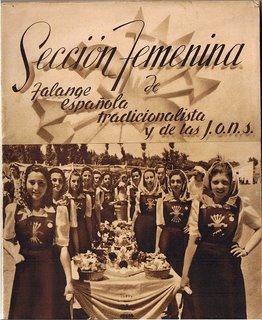
Just now and then in the course of my research, I come across something I can’t resist sharing. The following is a translation of the advice given to married women under Franco’s dictatorship. It was drawn up by the Sección Feminina of the Spanish Falange in 1958.

seccion-femenina1

When your husband returns from work, have a delicious meal ready, in particular, his favourite dish. Offer to take off his shoes. Speak softly in a relaxed, pleasant tone.

Prepare yourself: retouch your make-up, put a ribbon in your hair, make yourself a bit more interesting for him. His hard working day means his spirits might need a bit of a lift and one of your duties is to provide this.

During the coldest days you should set a fire in the fireplace and light it so that he can relax in front of it. After all, devoting yourself to his comfort will give you an immense sense of personal satisfaction.

Minimise any noise. At the time of his arrival, stop the rumble of the washing machine or the vacuum cleaner. Greet him with a warm smile and show your desire to please him. Listen to him, let him talk first. Remember that his conversational topics are more important than yours. Never complain if he arrives late or goes out to dine or to visit other places of entertainment without you. On the contrary, try to understand his world of tension and stress, his real needs.

Make him feel at ease, reclining in a comfortable armchair or lying down in the bedroom. Have a cold or hot drink ready for him. Don’t demand explanations of his actions, his judgments or his integrity. Remember always that he is the master of the house.

Encourage your husband to put his hobbies and interests into practice and support him without being excessively insistent. If you have some hobby, try not to bore him by talking about it, since women’s interests are trivial compared to those of men. At the end of the evening, clean the house again so that it’s clean in the morning. Anticipate his breakfast time needs. Breakfast is vital for your husband if he is to face the world in a positive mood.

Once you have both retired to the bedroom, prepare yourself for bed as quickly as possible, bearing in mind that although feminine hygiene is of the utmost importance, your husband doesn’t like waiting to go to the bathroom. Remember that you must look immaculate at bedtime… if you have to apply face-cream or put rollers in your hair, wait till he is asleep as this could come as a shock to a man last thing at night.

With regard to the possibility of intimate relations with your husband, it is important to remember your marital obligations: if he feels the need to sleep, let him and don’t pressure him or stimulate intimacy. If your husband suggests intercourse, agree humbly, always taking into account that his satisfaction is more important than that of a woman.

When the moment of climax is reached, a small moan on your part is sufficient to indicate whatever enjoyment you may have experienced. If your husband demands of you unusual sexual practices, be obedient and don’t complain. Afterwards your husband will probably fall into a deep sleep, so adjust your clothing, refresh yourself, apply your facial cream for the night and the products for your hair. You can then set the alarm clock in order to rise a little before him in the morning. This will allow you to have a cup of coffee ready when he wakes up.

It reads like a spoof but I don’t think it is. The Catholic Church had a massively powerful influence in Franco’s Spain. Women’s sole function was to bear and raise children. Divorce, contraception and abortion were forbidden and women were not allowed to travel, apply for a passport, open a bank account or sign a contract without the permission of their husbands. The Falange’s advice sounds laughable (as well as shocking) to us now but I suspect that American wives of the 1950s would not have found it so alien. Even in Britain in the 50s and 60s, women were still solemnly vowing to obey their husbands in the C of E marriage service. In a culture where religion is strong (and controlled by men), women beware!

 cartelas

Fiction and Politics

It sounds like the stuff of political fiction – something along the lines of Philip Roth’s alternative history novel The Plot Against America, in which Hitler-admirer Charles Lindbergh wins the US elections instead of Roosevelt – a pussy-grabbing, Muslim and Mexican-hating demagogue as President of the US. Yet this is now the reality we all – inside and outside America – have to face.

However, this isn’t a blog about Trump or the dangers of a demagogue as president but about the concept of political fiction in general and where my own writing fits into that genre. The action of a novel happens in a political and historical context even though story and characters and domestic setting are imagined rather than real. Within that context, the politics of the time are going to impinge on the characters to a greater or lesser degree, a choice made by the author. Politics is part of life – it affects all of us regardless of whether we take an interest in the actions of our or other governments. The fiction I write (and much of the fiction I read) is political in the sense that it carries some kind of message. I feel passionate about certain issues. Social justice, for example, has always concerned me, and this is reflected in the underlying themes of my novels. I’m not talking diatribes, just stories that make readers think as well as feel. One thing I have learnt over many years of novel-writing is that the story must come first. If readers aren’t involved in the characters and their lives, (rather than abstract issues), it fails as a novel.

In the 1980s, immersed in the anti-nuclear movement, I wrote a novel addressing that issue, with the then terrifyingly possible scenario of a nuclear war started by mistake as a result of the Launch-on-Warning system and how it impacted on the lives of my four main characters. In the early 90s, working for Age Concern, I was inspired by the stories, shocked by the many hardships, of those I came into contact with. I put my indignation about the treatment of older people into a novel about a feisty, spirited eighty year-old overcoming the obstacles placed in her way and the indignities of failing health and lack of resources.

Secrets of the Pomegranate explores the consequences of secrets and lies, both personal and political, the effects of prejudice and stereotyping, Islamophobia… But what keeps readers turning the pages is the secret between the two sisters and the ambiguous role of Deborah’s ex-lover Hassan.

My current work-in-progress The Red Gene deals with the suffering in Spain during the civil war and dictatorship, the terrible wrongs and injustices of the Franco era – executions, disappearances, slave labour, stolen babies – with a legacy that still haunts present-day Spain. The story, however, is intensely personal.

My political views have been partly shaped by some of the novels I read earlier in my life: The Ragged-Trousered Philanthropists, the novels of James Baldwin and George Orwell, some of the feminist writers such as Doris Lessing, Marge Piercy and Marilyn French. Like them (but please don’t think I’m comparing myself in any literary sense), I transmit my ideals, my indignation, my passion through characters I hope readers will care about. Do I seek to change opinions? If that were my primary aim, I’d have put my efforts into journalism rather than fiction. Far more important to me is that my novels are enjoyed. The story must always overshadow the politics. But if even one or two of my readers are prompted to confront their prejudices or think about things in a slightly different way, I will be satisfied.

FICTION IS FICTION: WHY LABEL IT?

Literary or…? ‘Commercial’ used to be the word employed to describe more run-of-the-mill fiction – by implication, fiction more likely to sell but unlikely to win prizes or be taken seriously by reviewers. Fiction without much prestige for the author. Now the word is ‘genre’. It’s often the first question when you mention you write novels: what genre do you write in? And it always stumps me.

Secrets of the Pomegranate has been categorised as ‘women’s fiction’, ‘issue-led reading group fiction’ and ‘psychological’ (whatever that means). ‘Thriller’ and ‘political’ have also been suggested. The Red Gene, my work-in-progress, could be classed as ‘saga’ as it spans three generations, ‘women’s’ as the three main characters are women, ‘historical’ as it’s set between 1936 and the present, ‘romance’ as a love story is integral, ‘war’ (the setting for a substantial part of it); even ‘crime’ as the plot hinges around a crime (though this is hidden to the protagonists). Or does it fall into the ‘literary’ class? My former agent said my writing was on the cusp of literary and commercial. Secrets of the Pomegranate was described by one reviewer as ‘literary without being overly poetic’. Now I’ve learnt that this blurred area between literary and commercial has a name of its own, the new genre of ‘sweet spot fiction’ and what’s more, it’s in demand.

9781781323694_100dpi

The obsession with labelling novels has always seemed to me unnecessary and unhelpful. Shakespeare’s plays are classed as Comedies, Tragedies or Histories. A neat divide but in my view neither life nor fiction can be placed in such distinct boxes. How many lives, how many stories consist of only tragedy or only comedy? Admittedly, the historical/contemporary divide does make some sense – though even ‘contemporary’ novels contain some history (it’s usually referred to as backstory).

As for ‘women’s fiction’, does this label assume that men are uninterested in novels with female protagonists, novels that explore human relationships, those with love interest? Does it assume that women are too unintelligent, soft or domestically-minded to read novels dealing with supposedly loftier themes such as war, politics or murder, for example? Such an attitude insults both men and women. Has anyone heard of ‘men’s fiction’? Or is all fiction that doesn’t fall into the ‘women’s’ box (i.e. more ‘serious’ fiction) by default, men’s?

The stigma attached to ‘genre’ as opposed to ‘literary’ fiction is rather like that attached to indie-published books. As if literary authors have no interest in selling their books. They need to live too: a good review in a prestigious newspaper is great as encouragement but doesn’t put food on the table or pay the rent. ‘Genre’ or ‘commercial’ fiction, despite selling much better then ‘literary’ (with the exception of the big prize winners) is often held in disdain.

img_2360

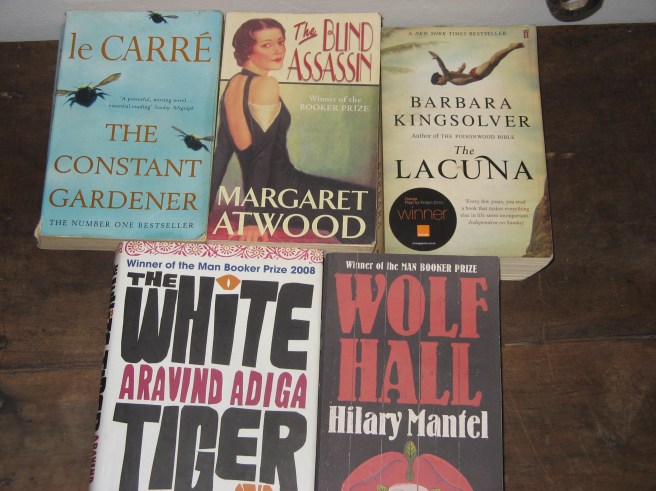
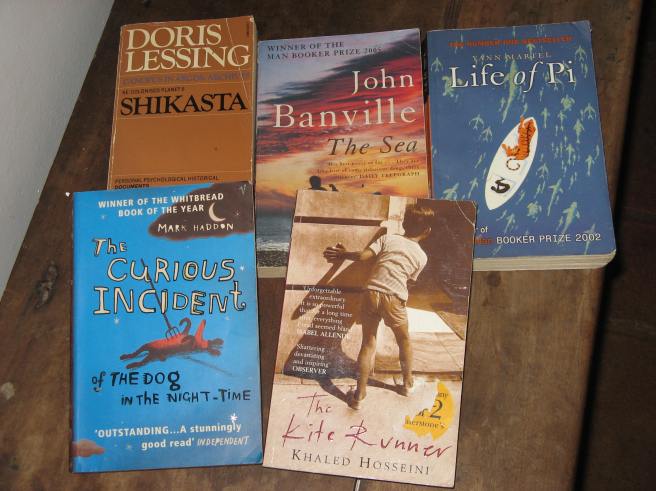
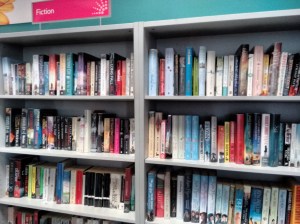
But does ‘genre’ equal bad writing? Absolutely not. It embraces everything from the worst formula writing to Booker Prize superlative. Mills & Boon romances may be written to a formula, but Thomas Hardy’s novels are also romances, even if they tend to have tragic endings. So are Jane Austen’s. There are some brilliant contemporary writers working in so-called genres, whether sci-fi, thriller, fantasy or crime. Margaret Attwood and Doris Lessing (as well as Aldous Huxley and George Orwell in the last century) have written sci-fi. Philip Pullman’s Dark Materials trilogy is fantasy but there’s nothing prosaic about the writing. Spy novels by John Le Carré, crime novels by Ian Rankin, Val McDermid or Ruth Rendell, to name just a few, meet all the criteria of ‘literary’ writing. The selection pictured here includes several prize-winners. It includes sci-fi, historical, crime, political and some I’d never even attempt to classify. I guess all would be seen as literary.

IMG_2362.JPG

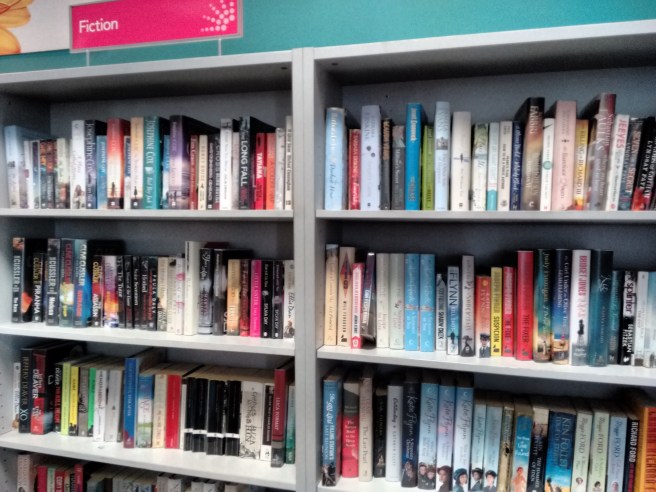
The artificial divide no longer makes sense, if it ever did. Even the fiction/non-fiction split may be questionable. Fictionalised biographies, for example, have become prolific in recent years. Agents and publishers say the bookseller or librarian needs to know where to put the book on their shelves. Fair enough, but in the UK (in Spain books are usually grouped by publisher), every bookshop and library I’ve ever been in has a large section for Fiction A–Z. Is that a valid category? Perhaps it should be.

img_20160914_131627715

Public Libraries: an SOS

“I ransack public libraries, and find them full of sunk treasure.” Virginia Woolf

“Without libraries what have we? We have no past and no future.” Ray Bradbury

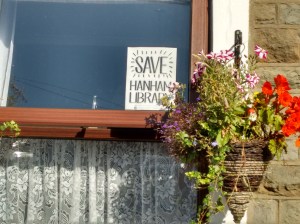
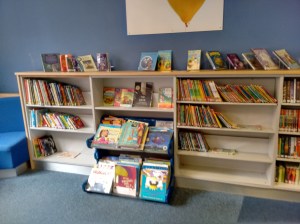
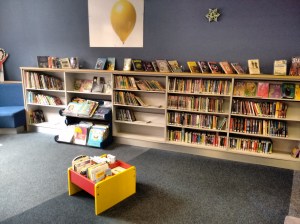
Public libraries in the UK are under threat: many are closing, others are having book funds and opening hours savagely cut; paid staff are being dismissed. As an author, a grandmother and a former librarian as well as a reader, I am appalled.

img_20160911_101414673_hdr

In the early 70s the well-known vodka manufacturer Smirnoff came up with a billboard ad featuring a rather wanton-looking blonde woman sprawled in a hayloft in a state of semi-undress. She wore a laced bodice like some of the heroines of the romance novels so popular with female readers. The slogan read I was the mainstay of the public library until I discovered Smirnoff. Desperate to banish the traditional image of our profession – one that depicted us as stern, owlish spinsters with clumpy shoes and hair in a bun, we welcomed the ad, with its clear sexual connotations. Posters of it sold like hot cakes among librarians. The Library Association, the normally serious professional body I belonged to, bought a job lot to sell. Like many of my colleagues, I had one up on the wall of my bedroom. We thought it a great joke but in fact it was pretty offensive, reinforcing rather than ditching the old-fashioned view of librarians as timid, prim and boring. None of the librarians I knew conformed to this image. Rather than patrolling our territory commanding silence, we were encouraged to make the public libraries we worked in lively, friendly places, attractive to young people in particular. But in the ad, only alcohol – or more specifically Smirnoff – was capable of unlacing the strait-laced librarian. (Though actually, I’ve a feeling Smirnoff meant their model to be a library user rather than a librarian, which is even worse.

img_20160914_131627715

Back then, when most bookshops were independent, when there was no Amazon and the Net book Agreement kept book prices fixed and relatively more expensive (e-books were barely imagined), most regular readers used libraries. I was the mainstay of my local library long before I starting working in one. I’ve never read as many books as I did in my childhood years between learning to read at five and leaving school at eighteen. The number of books I owned was small but two or three times a week I would head to the library and browse the shelves of this amazing treasure trove, bringing home each time the maximum number of books allowed. I would devour the entire output of Arthur Ransome, Geoffrey Trease, Malcolm Saville or whoever was my current favourite, pouncing with glee on any I had not yet read, disappointed when they failed to match their output with my prolific reading rate.

img_20160914_131557387_hdrimg_20160914_131509279

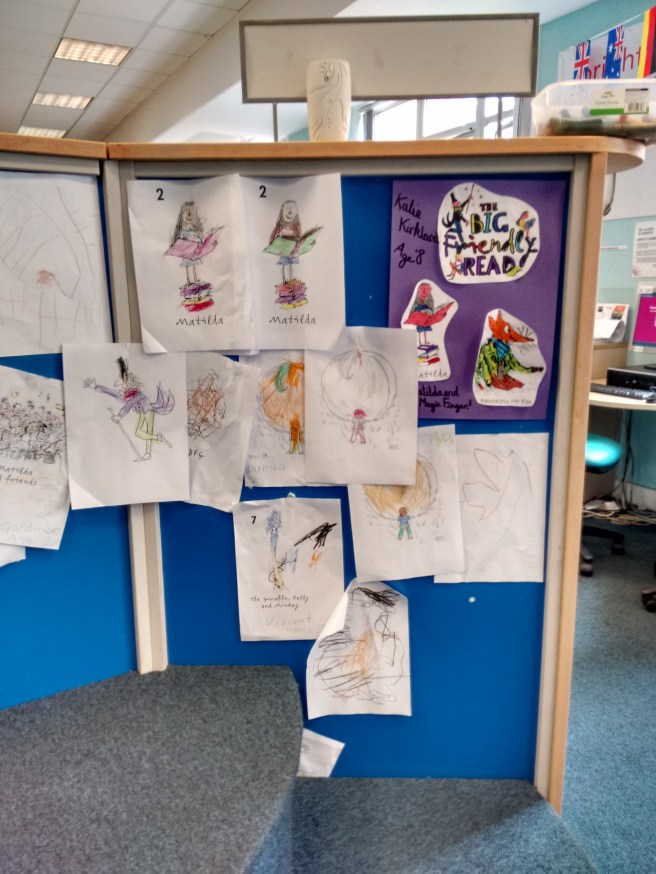
Later, as a children’s librarian, I had the chance to enthuse the children of the 70s about books. I ran story times, competitions and other fun activities. I chose the stock, read all the new books and made recommendations. In those days there was still an adequate book fund; local libraries – even in quite small communities – were open every day except Sunday and several evenings a week; they were staffed by professionals with university degrees in librarianship or one-year post-graduate diplomas. They were not endangered places as they are now. No one suggested they could be run by unqualified volunteers.

img_20160914_131533680_hdr

Now, as an author, I am told there is no money for new books, though of course I would be welcome to donate a copy of my book to stock. With local government funding being cut ever more, libraries are not the first priority. I agree that the demise of libraries is not life-threatening, as cuts to some other services may be, but books can truly enrich lives. They certainly enriched my childhood. I have visited family homes without books – homes not necessarily poor in the economic sense, but deprived imaginatively. The love of books must be instilled early in life. I remember my own delight in books and the pleasure of passing it on to my children by reading to them. Now I’m a grandmother, I see the wonder and imaginative power of books through the eyes of my grandchildren. The brilliant and wildly popular children’s author Julia Donaldson commenting recently on the withdrawal of school librarians in Argyll and Bute, said libraries gave all young people a place to read, to daydream, to think creatively, to grow intellectually.” We must fight for them.


The Elusive Muse

I sit at my computer. Two hours pass by, three hours… and I’ve written nothing. My thoughts veer wildly, resisting any kind of discipline. The internet diverts me, even if my browsing started off as genuine research. E-mails ping their arrival; the urge to check their contents is strong. More often than not, they prove to be nothing more inspirational than sale offers, petitions or notice of bills, but I’m too weak to ignore them. My ability to focus has deserted me. How long should I sit there, ostensibly at work but in fact merely frittering away the precious moments? There’s a time to stay and a time to go but how to tell them apart? Two unproductive hours at my desk may be two hours wasted. Or they may lead to an hour’s furious typing and a thousand inspired words.

I’m waiting at the dentist’s. My mind is blank, zombie-like. Until, from out of nowhere the muse blows in with a superlative idea. I rummage in my bag for a pen, something to write on: the back of a till receipt, that restaurant or decorator’s flier handed to me in the street; any scrap of paper will do. I can’t believe there is no pen. How could I have been so negligent as to leave the house without one? It’s the number one rule for a writer: always have a pen and paper handy – in the bath, on the move, in bed, wherever. The idea refines itself. I am desperate to write it down before it vanishes, replaced by some distracting conversation about teeth or inconsequential domestic detail. My lousy memory can’t be trusted to wait for a more appropriate moment. I borrow a pen from reception and scribble a few notes before I’m called in.

IMG_0247

Riding my bike, mind half on the traffic, half on my work-in-progress, I’ll suddenly pull in to the side of the road and jot down my brilliant sentence or plot twist. Ploughing my lengths at the swimming pool, I hold on to the thoughts until at last on dry land in the changing room with a towel at hand, I can write without soaking the paper and making of my brainwave a soggy illegible mess. (You can spot a writer anywhere.)

Now when I sit at my computer, I’m faced with a collection of untidy scraps of paper extracted from the bottom of bags, where they may have lurked for days. Crumpled and stained, they are nevertheless valuable and must be saved. Some go into a folder; others have their contents typed straight onto the screen to form part of my masterpiece.

For the ultimate in communing with the muse, nothing can top a retreat: time spent in complete isolation, far away from all the mundane tasks and social interactions that go with being at home. Total immersion is the ideal way to make progress. My novel is everything: it fills every space in my brain, allowing no intrusions. New ideas come racing towards me – character or plot developments, snatches of dialogue, revisions of structure… I welcome them in, gathering them up like precious blooms. I don’t have to be at a desk day and night. I can walk in the countryside, swim in the sea, sit over a coffee. I return to the computer fired up with enthusiasm, eager to transcribe the pages of notes I have produced during my sortie.

IMG_20151115_121527815_HDRIMG_20150813_195930

Sadly, it cannot last. Back home after a few days or weeks on retreat, writing immediately grinds to a standstill. There are jobs to catch up on, social life to resume. I mourn the loss of my parallel life of fulltime creativity. I must find a way to invite the muse back in. The secret, I know, lies in gaining freedom from all the usual preoccupations. Only when problems have been dealt with or dismissed and the mind is a blank sheet, will inspiration strike. A long walk, a day on the beach, may well be more productive than hours facing a screen, but only if I’m alone. Writing is a solitary occupation. The muse is shy, elusive, unreliable, the most perverse of companions. But every time it appears at my side, I give thanks for the miracle.


Them and Us

When I first arrived in Granada seventeen years ago, from a multicultural Britain where overt racism had long been socially unacceptable, I was shocked by the racism against Arabs that I found even amongst educated people. It struck me as ironic that while Granada and other towns in Andalucía were cashing in on their Moorish heritage (in particular the Alhambra) to attract thousands of tourists every year, they seemed unashamed of openly denigrating the moros who had settled in the city over the past twenty years or so, mainly from Morocco or Senegal. These people were labelled inmigrantes as opposed to guiris, the rather more affectionate term used for immigrants like me from northern Europe.

Barbara_nocturnoIMG_5071


I wondered if this prejudice could be a historical hangover, a kind of inherited memory passed down the generations from the centuries of struggle between Muslims and Christians. Or whether it was simply due to the fact that immigration (still on a very small scale) was such a recent phenomenon in Spain. For decades the Spanish had emigrated to other countries – Latin America or northern Europe – either for political or economic reasons. Its people were not used to immigrants. Could it even have something to do with Franco’s use of Moroccan mercenaries against the Republican population during the Civil War?

D4CV4136

When I wrote Secrets of the Pomegranate, prejudice and especially Islamophobia was one of my themes. Deborah, the central character in the novel, had a relationship with a Moroccan journalist and faced insults from some of her neighbours as a result. She fought alongside local Muslims (some of them European converts to Islam) for the right to build a mosque in the Albaicín, virulently opposed by many in the neighbourhood. (I remember being shocked by some of the racist graffiti I saw daubed on the walls of my barrio.) After 9/11, an al-Jazeera journalist in Granada was arrested and accused of having connections with terrorists. Something similar happened after the Madrid train bombings in 2004, with which the novel opens. My fictional character Hassan was one of those accused.

IMG_1517

IMG_1946


In depicting this background to the story, I was not suggesting that racism was worse in Spain, just more open and admissible. Deborah’s sister Alice, who had always lived in England, was also prejudiced, as was their mother. Their suspicion of Hassan was based purely on prejudice.

Now, after the ugly Brexit campaign in the UK with its blatant appeal to xenophobia and its not so subtle message that immigrants are to blame for all the country’s ills, it has suddenly become permissible in the UK too to insult foreigners. The campaign hardly even bothered to distinguish between European ‘economic migrants’ whose status would be affected if Britain left the EU, and desperate refugees from the wars in Syria, Iraq or Afghanistan, whose countries the West had been complicit in bombing.

Britain has in fact opened the door to precious few of these refugees, considering it is one of the richer countries of Europe. Instead, the flood gates (to use the type of expression employed in the Brexit campaign when talking about immigrants) have now been opened to hate and prejudice, which it seems was always lurking below the civilised surface. I thought Britain had embraced the richness and diversity of other cultures. Was it all just superficial? No more than a liking for Indian food, Jamaican reggae, hardworking Polish plumbers and the open-all-hours Pakistani corner shop? I’m horrified by how little it took to awaken the latent racism beneath. I feel deeply ashamed of my country. The sudden rise in racist incidents is shocking. Now, anyone ‘foreign’, whether born in Britain but the wrong colour, a recent refugee or a longstanding resident – maybe one of the many doctors, nurses and carers keeping the health and social services going – seems to be fair game for abuse.


I’m well aware that a vast number of my compatriots in Britain abhor what is happening as much as I do and are actively taking steps to show their support for those from other races and cultures, in particular helping refugees. Almost half the country voted to stay in Europe and of those who voted to leave, I would guess only a minority are racists. In Granada (and other parts of Spain) too, many are showing solidarity with refugees. The Spanish, after all, know only too well what it is to have to flee their country. Half a million did so as a result of the Civil War or its aftermath.

Prejudice and hatred are the result of division, of a ‘them and us’ mentality that denies humanity to ‘them’. Wars as well as individual acts of hostility result from creating enemies of those who are ‘other’, whether through religion, nationality, class, race, sexuality or whatever. My father, a (secular) Jew from Berlin, seeing the rise of fascism and what it might lead to, felt he had no choice but to leave his country and sacrifice a promising career in law. Fascism is now on the rise in several European countries. A far-right fanatic shouted Britain First as he shot and stabbed an MP known to support refugees. Could it really all happen again? Or can we take hope from the efforts of those moved to action by the negative fallout of the Brexit campaign and the plight of refugees?

IMG_20160620_211006619_HDR
Solidarity with refugees in Granada


Teenage Diaries

 IMG_20160605_184031345

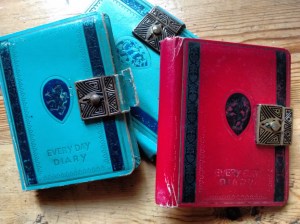
It had to happen. The teenage diaries still lurking in my barely accessible loft had to be retrieved. Not only retrieved but read. Oh horror. Not only retrieved and read but destroyed. Pronto! I opened the box and there they were: pages and pages of excruciating writings that detailed the emotional agonies of my teenage years. I remember so clearly the satisfaction of buying those ‘lock-up’ diaries; I even remember where I used to hide the key. Last week (with the key long lost), I discovered just how easy it was to tear the plastic-covered cardboard tab that made of that key a complete nonsense.

If I ever write a memoir or a novel set in the 1960s with a teenage girl as protagonist, I might regret ripping those pages to shreds and disposing of them. Otherwise, my only feeling will be one of relief. The thought of anyone else reading them – even after my death – appals me. They were never meant to be read, and certainly not by my children. Diaries are mostly a therapeutic exercise – and a very effective one too.

At fourteen, the content was boring and banal. Did my homework. Practised the piano. Helped. (Had my mother written a journal, I don’t think she would have considered my ‘help’ worth a mention.). Resentment towards my parents for setting bounds to my liberty pervaded the diaries. At fifteen the youth club became the highlight of my week. Boys’ names surrounded by hearts began to feature heavily. From then on pain oozed from the pages. My heart was broken with depressing regularity. From the long list of boys I ‘snogged’ over the next few years, no one would guess how innocent I actually was. When I met my husband-to-be at nineteen, I was still a virgin. (So was he.) No drugs either, just a few ‘ciggies’ and the odd alcoholic drink. The sixties didn’t really swing very much for me.

There were later diaries too: happiness but also more heartache, more setbacks in the search for love. How much had changed? What had I learnt? What had I still to learn? As I chronicled the highs and lows of my thirties, forties, fifties, the patterns seemed to repeat themselves over and over. Without the innocence. Too revealing by far, these diaries also had to be consigned to oblivion.

Diaries have featured prominently in two of my novels. Violet Bradshaw, the protagonist of Diary of a Wrinkly Rebel, was a woman of 79, living in a sheltered dwelling in England’s Midlands in the early 1980s just after Thatcher’s downfall. Feisty and determined, she struggled with the humiliations imposed by physical disability and a low income, but her sense of humour and spirit shone through her diary. Violet was inspired by some of the older women I met while working in the community. She certainly wasn’t me.

Neither was Deborah in Secrets of the Pomegranate, although some of her experiences, for example, buying and renovating a house in the Albaicín, coincided with mine. None of what happened to her in the story mirrors events in my own life and her personality is completely different from mine. Perhaps, imagining my own likely reaction, I felt a spark of indignation on her behalf when her sister Alice invaded her privacy by reading the diaries she left – though without them, the novel would have been poorer, reflecting only other characters’ views of Deborah.

“Alice knew she shouldn’t be reading the diaries, not while Deb was still alive. She had opened the first notebook intending just a peek at the earliest days before replacing all six books in the shoebox and returning it to the back of the filing cabinet. But once she’d started, the words seemed to hypnotise her, compelling her to read on. The words were Deborah. Alice could hear her voice, see her in the apartment, in the market place… Reading these pages brought her sister closer. Deb would forgive her, surely?”

People are often curious as to whether what I write is autobiographical. Undoubtedly, there is something of me in all my characters, young or old, male or female, but I write novels, not memoirs. My travel books were based on personal experience but I am far too private a person to share the more intimate feelings revealed by a diary. Safely disguised in fiction, I can process my experience in other ways through the creation of characters very different from me but who still share the basic emotions common to all of us. One of the reviewers of Secrets of the Pomegranate made the comment: ‘This is writing by someone who understands people’. I regard it as one of the best compliments a writer could receive. Thank you, buzzsmith.

TRAINS TO WRITE HOME ABOUT


My partiality for train journeys goes back to my youth and shows no sign of deserting me any time soon. It was revived most recently by a train trip down the length of Italy. On one side, only the narrowest strip of yellow beach separated us from the limpid Adriatic Sea, while on the other, our eyes were rewarded with views of the snow-covered Apennines. As the ticket inspector said when he examined my ticket, Tutto perfetto.

However, the landscapes and scenes of everyday life glimpsed through the windows are only one of the joys of train travel. At least as important for me is the contact with people and cultures found in the confines of the carriage. Forced into proximity with random local travellers, you learn so much more about a country.


After the Trans-Siberian Railway (see previous post), our adventures took us further east to Japan and then on a backpacking odyssey around SE Asia, where the comfort and efficiency of the trains varied as widely as the topography. I had expected comfortable berths on the Japanese trains but it turned out that at five foot six (1.67m), I was too long; few Japanese are of such giant proportions. There was little concession to comfort on the Indian trains either: the beds, though longer, were unpadded wooden shelves. Whenever possible, we travelled in the Ladies’ Compartment, a safe refuge from the crowds and chaos elsewhere. As for punctuality, Russia got top marks while in India and Indonesia the word was meaningless. In Burma, as the charming immigration officer explained to us, the Rangoon-Mandalay Express was ‘punctually four hours late’.

IMG_20160426_175006843_HDR
View from the Bangkok-Butterworth Express, Malaysia

Food was one distinguishing cultural feature. Long before sushi became trendy in Europe, Japanese travellers boarded their trains carrying balsawood o-bento boxes packed with little parcels of rice, raw fish and pressed seaweed. In Burma, chicken biryani was served on delicate banana leaf plates. On some Indian trains, orders for meals were taken on the train and telegraphed to the next station, where they awaited you on arrival. But those with pantry cars were the best. Recently I was sent an email detailing the government’s plans to ‘modernise’ by abolishing these and selling hamburgers and pizzas instead. Invited to comment, I was sufficiently outraged to write to the Minister, pleading for a change of heart. What would Indian trains be without the waiters making their way from carriage to carriage with urns of tea and milky coffee at ten rupees, with portions of vegetable biryani or samosas, and the regular chants of koffee koffee koffee, chai, chai, chai, biryani biryani biryani?

IMG_20160426_174657183_HDR
Kuala Lumpur station

An unexpected challenge on our 1975 trip was the bra test at the Malaysian border. Posters announced that only those women with the requisite support would be allowed into the country. Was this an excuse to ogle female travellers, I wondered? Fortunately, we got through without being manhandled or examined too closely. We arrived at Butterworth with a tropical storm raging. As we sat in the station restaurant in darkness illuminated only by a flickering candle, we were pounced on by an American Scrabble fanatic. Despite the lack of light and the arrival of our meal, he insisted we must play then and there. On the next train, we were entertained by another eccentric – a young man accompanied by a Pekinese dog, which he hid in a biscuit tin every time the conductor passed by.


My fondness for trains was most severely tested on a journey across Java in Indonesia. For twenty-six hours we were confined to hard wood and rattan seats by the press of humanity and baggage crammed into every available space, including the adjacent toilet, occupied by at least five people undeterred by the overpowering stench. The windows only opened a fraction and when we were stationary – waiting for trains from the other direction on the single-line track or for relief engines on the two occasions when our train broke down – there was no air at all. In the humid tropical heat, we had no choice but to sit and sweat like everyone else. Vendors of duck eggs, rice-and-duck, fruit and garishly coloured iced drinks fought their way down the train at regular intervals, shouting their wares in loud, frantic voices. Soon the floor was a sea of squashed fruit and peel, eggshells, duck bones and rice. The lights were all out of order so once darkness came, reading as a means of distraction became impossible. Children screamed. I felt like screaming too.


centenary plaque

But back to Spain and the 21st century. While Granada’s high-speed AVE remains stalled, my favourite railway line is one built by the British in the late 19th century between Ronda and Algeciras, port city for the crossing to Africa. The scenery here is spectacular, passing through two of the most unspoilt and beautiful Natural Parks in Andalucía, Los Alcornocales and Sierra de Grazalema. I can board the train in Granada but the best part comes after Ronda. For much of the way, the single-track line snakes in graceful curves along the valley of the river Guardiaro, its banks lined with ash trees, poplars and willows, and in summer the bright splash of pink oleander. The track crosses the river several times by way of picturesque bridges and viaducts so that the clear tumbling waters can always be seen on one side or the other. As the land slopes upwards, the evergreen cork and holm oaks take over, their silvery foliage contrasting with the darker hue of cypresses, the yellow of broom. Higher still, jagged outcrops of limestone stand out starkly against a sky of deepest blue. Numerous tunnels had to be cut through the rock and in places the slopes are so steep that in wet conditions, sand has to be sprinkled on the line to prevent the wheels slipping. You pass huge flocks of goats, pigs grubbing for acorns in the forest, ruined cortijos, olive, almond and orange groves and now and then a picturesque whitewashed village or hamlet crowning a hill or nestling in a valley.

2004_1031Image00752004_1031Image0083

The main purpose of this line was to ship British goods from Gibraltar, but military officers stationed there also took advantage of it to escape the heat of the Rock in favour of  cooler climes inland, avoiding the potholes and bandits that made the roads through this area so dangerous. Smugglers found the slow steam trains used on this route until 1976 the perfect way to transport contraband tobacco, selling it from the windows.

benaojan station 2

In The Red Gene, my novel-in-progress, Rose, traumatised by her recent experiences, is escorted along this line by two Civil Guards. The year is 1939. Bobadilla, Campillos, Ronda, Benaojan… Rose gazed out of the window at the landscape of densely wooded hills and limestone outcrops, the dramatic river valley below. She recalled a young Spanish soldier whose last moments she had shared at the Ebro; whose hand she had held as he talked with longing of his village here in the Serranía de Ronda.

river and railway line